
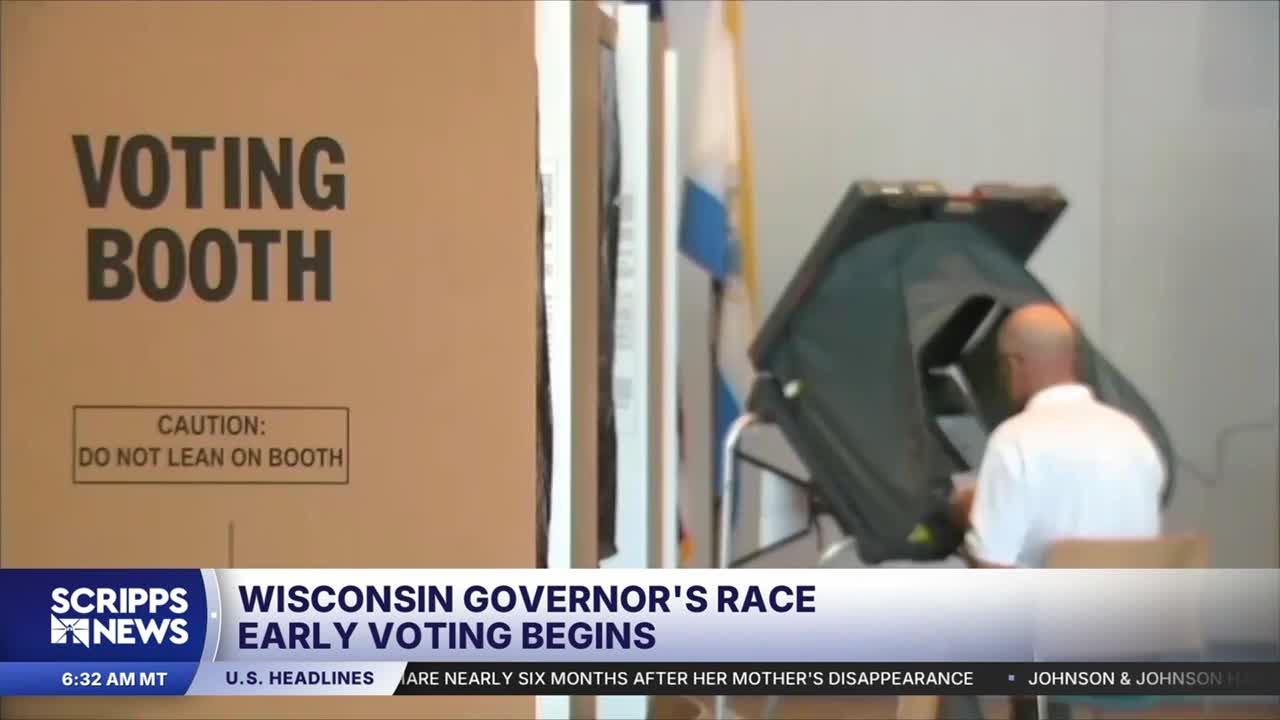


Five Democratic candidates vying to become Wisconsin's next governor faced off in their one-and-only debate Tuesday, exactly two weeks before Election Day and on the same day in-person absentee voting began across the state.
The debate came after a significant shake-up in the race when Sara Rodriguez dropped out, prompting Milwaukee County Executive David Crowley to re-enter the contest.
The Democratic field now includes Crowley, former Lieutenant Governor Mandela Barnes, businessman Joel Brennan, State Representative Francesca Hong and State Senator Kelda Roys.
Related: Ballot lawsuit adds new twist to Wisconsin's crowded governor primary:
The most recent Marquette polls showed that nearly half of all Democratic voters were still undecided earlier this month, meaning all 5 candidates still had the chance to win over lots of last-minute voters.
Hong, a Democratic socialist, has been the consistent frontrunner in many polls as she tries to make the move from state representative to governor. She pushed back on claims she would defund police after previous suggestions she would.

"The governor cannot defund police, and I'm not here to govern by slogan. I'm here to make sure that I am the governor that is most serious about public safety, and that means investing in the things that we know prevent crime," Hong said.
David Crowley picked up Governor Evers's endorsement after restarting his campaign. The county executive made his case to voters on the debate stage.

"I grew up in the 53206 zip code where I had to work extremely hard for everything that I have, and so I'm not here to protect the establishment. I'm here to deliver real results for Wisconsinites all over our state," Crowley said.
Mandela Barnes is attempting a political comeback. The former lieutenant governor argued the state's income tax structure needs to change.

"The way we give more money back to people, the way we actually return money to folks, is by taxing the wealthy, taxing the billionaires, taxing these corporations that have been getting over on us, making money hand over fist while communities continue to starve for resources," Barnes said.
Joel Brennan leaned on his executive roles in government and a nonprofit, suggesting his budget surplus priorities would focus on childcare.

"The first thing that I would spend — the first $100 million, which I will do in January, will go into childcare and early childhood education. It is a system that is broken," Brennan said.
Kelda Roys finished third in her 2018 run for governor. The state senator called for fully funding public schools while phasing out the state's private school vouchers program.

"I believe that public dollars belong in public schools, and if you take even $1 of public money, you need to be subject to accountability. And yes, over time I am going to bring the private voucher scheme to an end," Roys said.
The winner of the Democratic primary will likely face Republican Representative Tom Tiffany, who has been endorsed by President Trump. Following the debate, Tiffany responded, saying in part: "While Democrats offer chaos, I'm offering common sense. Lower taxes, safer communities, stronger schools and a government that lets the people of Wisconsin keep more of their hard-earned money."
108,000 voters in Wisconsin have already cast their ballots through mail-in absentee voting. 30% of those numbers come from the state's two biggest Democratic counties, Dane and Milwaukee.
The debate was held on the campus of Marquette University by WISN 12 News.
This story was reported on-air by Charles Benson and has been converted to this platform with the assistance of AI. Our editorial team verifies all reporting on all platforms for fairness and accuracy.
It’s about time to watch on your time. Stream local news and weather 24/7 by searching for “TMJ4” on your device.
Available for download on Roku, Apple TV, Amazon Fire TV, and more.