



Spring break travel may be on your mind, but before you book a plane ticket or hotel, make sure the website you're clicking is legitimate.
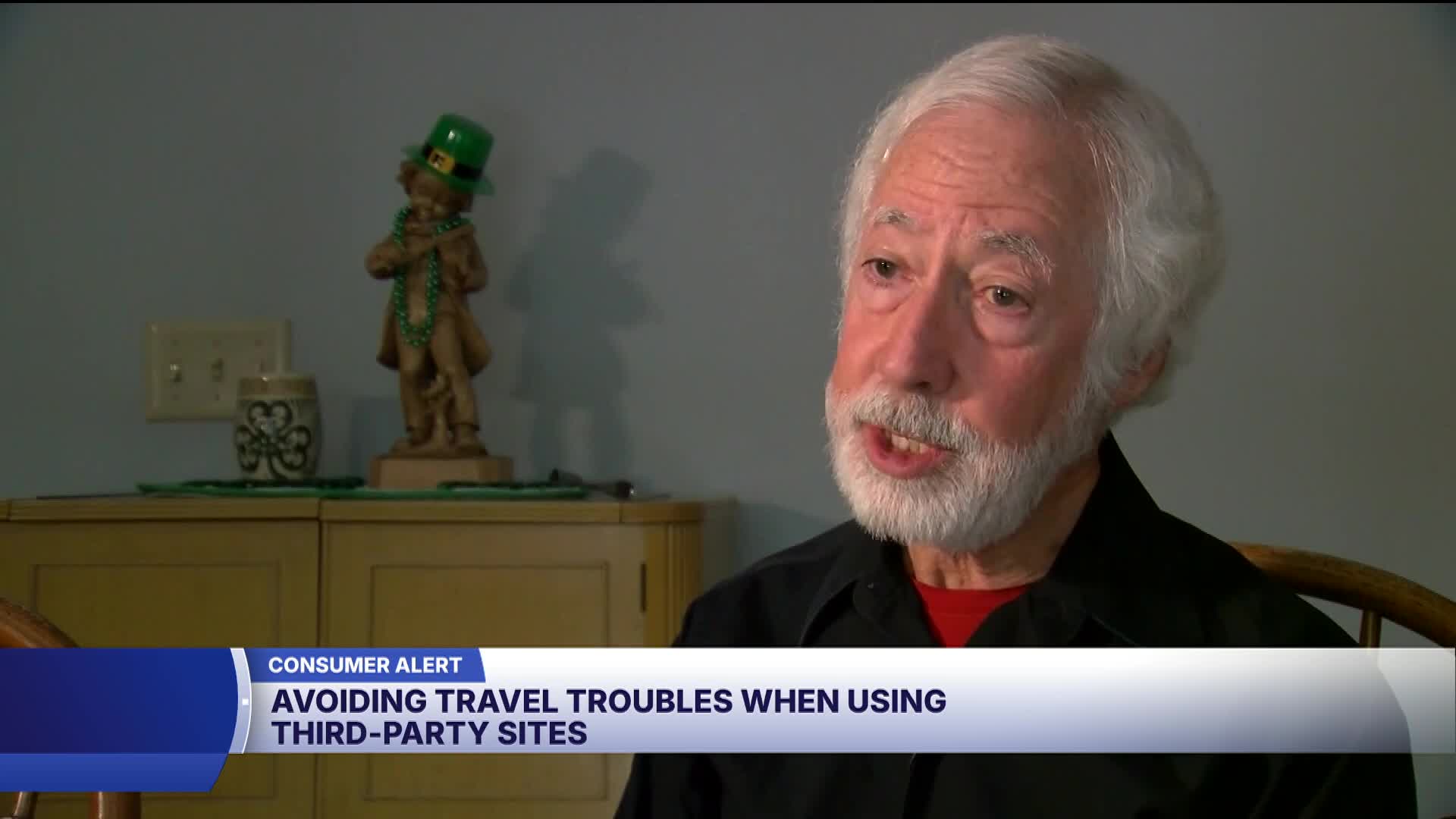
Third-party websites often appear as search engine ads that mimic official hotels or booking sites, trying to lure travelers in with lower prices. It's a lesson Steven Giles of Waukesha had to learn the hard way.
WATCH: Here's why you should always check legitimacy before booking tickets or hotels
Giles found what he thought was a great rate for a hotel stay in Canada. But soon after booking, he discovered a duplicate charge on his credit card.
"I was actually dealing with a third-party booking agent. Which I wasn't aware of at the time, and didn't really understand until I looked at the credit card bill and realized that we'd been charged twice," Giles said.

Third-party sites might save you money, but more often than not, your actual hotel may not be able to fix any billing problems. When Giles called the hotel, he was told the reservation wasn't between him and the hotel directly.
"I called the hotel and talked to a gentleman there. He answered right away and he explained that the reservation was not between me and the hotel. The reservation was between the booking agent and the hotel, and therefore I couldn't cancel the extra charge," Giles said.
When he tried to contact the third-party site, by phone and email, he ran into another dead end.
"She put me on hold and then after a few minutes she came back and she said, Well, the hotel didn't answer and so you're going to have to take care of this yourself," Giles said.
The site Giles unknowingly booked through, Reservation Counter, has an "F" rating from the Better Business Bureau and more than 30 similar complaints, ranging from hidden fees to difficulty canceling or modifying trips.
BBB spokesperson Lisa Schiller said travelers should do their homework before handing over payment information.
"Take a few minutes, research that URL, the website, the phone number, the contact information, because once you pay, now you're down a rabbit hole," Schiller said.
The BBB recommends the following when making travel plans:
- Book directly with the hotel or airline.
- Double-check the fine print — look for hidden fees and review the cancellation policy.
- Call to confirm your reservation.
For Giles, the situation nearly cost him close to $1,000 for a single night's stay before his credit card company stepped in.
"I'm not going to pay almost $1000 to stay in a room for one night, so I contacted the credit card company and said this is a duplicate charge. It needs to be corrected. Here's what I've done, and they said, OK, well we'll investigate it," Giles said.
In the end, his credit card reversed the extra charge. And Giles said he won't make the same mistake again.
"The best way to make a hotel reservation is directly with the hotel," Giles said.
Here are the top 5 vacation scams to watch out for when making travel plans, according to the Wisconsin BBB.
1. Vacation rental con:
Vacation rentals are a great option if you want to have the comforts of home when you travel. When booking your rental, watch out for listings for properties that either aren’t for rent, don’t exist, or are significantly different than pictured. These con artists lure in vacationers with the promise of low fees and great amenities.
The "owner” creates a false sense of urgency, such as telling potential clients that another vacationer is interested in the rental during the same time as your trip, to try and get your payment before you have time to do sufficient research or question the legitimacy of the listing.
Keep these tips in mind:
1) Talk with the owner by phone. If you are not using a service that verifies properties and owners, do not negotiate a rental solely by email. Many scammers don’t live locally. Speaking with the owner on the phone and asking detailed questions about the property and local attractions will clarify if the listing is true. An owner with vague answers is a clear red flag.
2) Check public records. Investigate online by looking up the address and using Google Street View to confirm the property matches the one advertised. Verify distances to beaches, attractions, and airports while on the site.
3) Use trusted vacation rentals. Visit BBB.org to find BBB Accredited vacation rentals near you. When doing your research on a vacation rental, search the company on BBB.org and read any customer reviews and complaints.
2. "Free" vacation scams:
When a cruise or travel company advertises a vacation as “free,” it does not necessarily mean the trip is entirely without cost or restrictions. Read the fine print and watch out for add-on fees for air transportation to the port, port charges, taxes, tips, and other undisclosed fees.
Learn more about these cruise scams and what red flags to watch out for.
If you’re interested in booking a vacation or cruise package, work with a reputable travel agency.
3. Third-party booking site scams:
If you book your airfare, hotel or other travel through a third-party website, be sure to use caution. BBB Scam Tracker continues to receive reports of scammers pretending to be online airline ticket brokers. In the most common version of the scam, travelers pay with a credit card, and shortly after making the payment, they receive a call from the company asking them to verify their name, address, banking information or other personal details – something a legitimate company would never do. The company may also call and say your flight has been cancelled, and you must pay additional fees to secure your seat or even bring baggage on board. Learn more about these booking scams.
Do your research before booking airfare or a vacation package with a company you’re not familiar with. Search on BBB.org and read customer reviews from other consumers.
4. Hotel scams:
When staying in a hotel, beware of these techniques used to get ahold of credit card information. Scammers count on tourists and business travelers being tired or in a hurry.
Pay close attention and watch out for these tricks:
1) Fake front desk calls. Scammers call late at night or right after check-in, impersonating the front desk person. The caller claims there’s a problem with the card on file and asks the traveler to "re-verify" the credit card information.
2) "Free" wi-fi connections. Wi-fi “skimming” targets travelers with the promise of free internet access. Scammers set up a fake connection that appears to be free hotel wi-fi, but it’s not safe. They will control the connection through their computer and collect all the data the traveler transmits, including passwords, card information, and more. Avoid doing any banking transactions or checking personal accounts when using an open wi-fi network. Use a secure, private network if it is necessary to access personal or financial accounts.
3) Fake food delivery. Scammers will distribute fake menus to hotel rooms. When a traveler calls the phone number and orders delivery, they collect the credit card information and never deliver the food.
4. Timeshare reselling cons: Another common travel scam is the timeshare resale con. A timeshare owner who is looking to sell gets a call from someone claiming to be a real estate broker or agent. These scammers claim to specialize in timeshare resales and promise they have buyers ready to purchase. To secure this service, the scammer pressures the target into paying an upfront fee. The timeshare owner pays up, but the reselling agent never delivers. Read more about timeshares.
General tips to avoid vacation scams:
To plan your vacation with ease, BBB has tips to help you find reputable travel-related businesses and avoid the red flags for common travel scams.
- Look for reviews and ask for references. While vetting hotels, travel companies, vacation rentals and more, check BBB.org for reviews and complaints. To find trusted businesses, look for the BBB Seal. Look for photos and read a variety of reviews. If the property or company doesn't have any online reviews or photos, ask them for references and call them.
- Remember, a great deal might be too good to be true. Scammers lure in targets by guaranteeing an amazing trip at a very low price. Research it first. If the hotel, travel or tour is much cheaper than similar options, be suspicious.
- Book your travel online safely. Take extra caution when using a third-party booking site. Make sure you are on a secure, legitimate website before booking your travel and making a payment. If you’re unsure about the site, go directly to the hotel or airline’s website and book directly with them.
- Avoid wiring money or using a prepaid debit card to pay for your vacation. These payments are the same as sending cash. Once the money is sent, there is no way to get it back. When paying with a credit card, the charges can be disputed.
- Do some research. Check the website for links to the company's social media accounts. If they do have social media accounts, check their activity and see if any other users have left reviews or voiced complaints. Also, look for typos and pixelated images. These mistakes are signs of a scammer, not a company that cares about its online presence.
This story was reported on-air by a journalist and has been converted to this platform with the assistance of AI. Our editorial team verifies all reporting on all platforms for fairness and accuracy.
It’s about time to watch on your time. Stream local news and weather 24/7 by searching for “TMJ4” on your device.
Available for download on Roku, Apple TV, Amazon Fire TV, and more.
