



Polling shows that the cost of groceries is now Americans' top economic concern, and a nationwide price comparison reveals how much what you pay depends on where you live, and how you shop.
According to NielsenIQ, ground beef prices have increased 15% since last year; orange juice is up 28%, and bacon, chicken breasts, and sandwich bread are also rising.
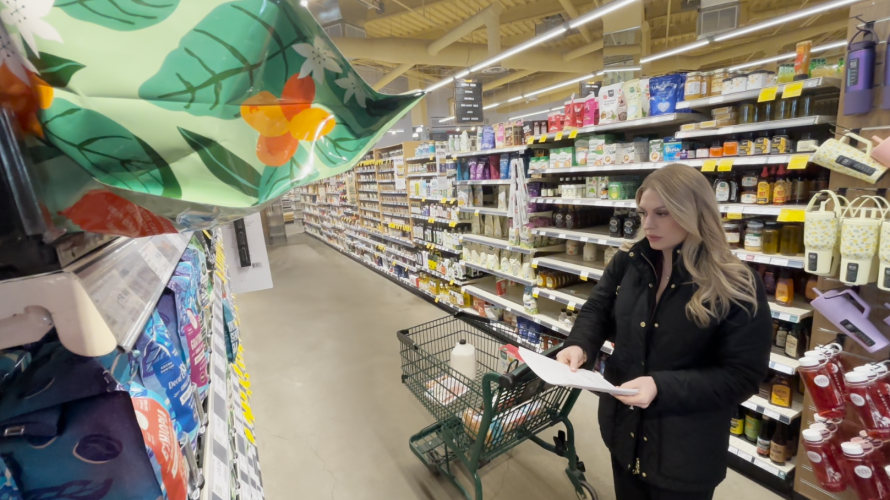
Andrea Albers teamed up with NBC stations coast to coast to go grocery shopping at three popular stores — Walmart, Target and Whole Foods — in 14 different areas across the country, from the Northeast and the South to the middle of the country and the West Coast.
WATCH: Price Check: Where you live determines how much you pay for groceries
At each retailer, we shopped the same list of a dozen staple items all on the same day: milk, eggs, butter, cheese and bread; coffee, cereal and orange juice; and fresh meat, veggies, pasta and tomato sauce.
We compared prices three ways: shopping in-store, buying online for in-store pickup, and ordering on each retailer's website for same-day delivery. We did not use store memberships and included local sales tax and all applicable fees.
Online pickup costs no more than shopping in-store
For shoppers wondering whether the convenience of ordering groceries online comes at a price, the answer — in most cases — is no.
In most cases, retailers charged the same amount whether we bought in-store or online for pickup. Shopping from home saved time at no additional cost.
For home delivery, we also paid the same prices as buying in-store, but faced extra delivery fees ranging from $9.95 to $13.95, plus bag charges in some areas and optional tips for drivers.
There are other potential downsides to home delivery as well. Retailers can substitute different products if they are out of what you requested, or sometimes leave an item out of your order altogether. Delivery is also dependent on drivers. One of our deliveries was delayed a full day because of driver issues, so shoppers should plan for possible delays.
It is also worth noting that store memberships can get you discounts on groceries and free delivery, but subscriptions cost $100 or more a year, so factor that in when deciding if they make sense for you.
Where you live affects what you pay
The regional price differences were the most surprising finding of our investigation.
At Walmarts and Targets nationwide, TMJ4 found the lowest prices in Milwaukee! At Whole Foods, NBC station WBTS found the lowest prices outside Boston.
As for the highest prices, at Walmarts and Targets, NBC station KNTV found them in California's Bay Area. But at Whole Foods, NBC station KTLM found the highest prices in San Antonio, Texas. Our groceries cost more there than in the suburbs of New York, New Jersey, San Diego or Los Angeles.
We also found different prices for the same item at the same store, depending on location. NBC stations WRC and WWBT found a 20% price difference for orange juice just at Walmarts in Virginia.
In a statement, Walmart said most of its stores use the same prices, but "certain commodities...can vary regionally due to localized cost and distribution differences." Target said its prices can differ store to store due to local promotions and competition. Whole Foods said its prices may vary due to "region-specific promotions, regulatory compliance, [and] variances in transportation and operating costs."
When we averaged our totals across all three retailers, we found the lowest prices in the middle of the country and the highest on the West Coast. But on average, buying groceries in the South cost just as much as in the Northeast, where median incomes are much higher.
This story was reported on-air by a journalist and has been converted to this platform with the assistance of AI. Our editorial team verifies all reporting on all platforms for fairness and accuracy.
It’s about time to watch on your time. Stream local news and weather 24/7 by searching for “TMJ4” on your device.
Available for download on Roku, Apple TV, Amazon Fire TV, and more.
