

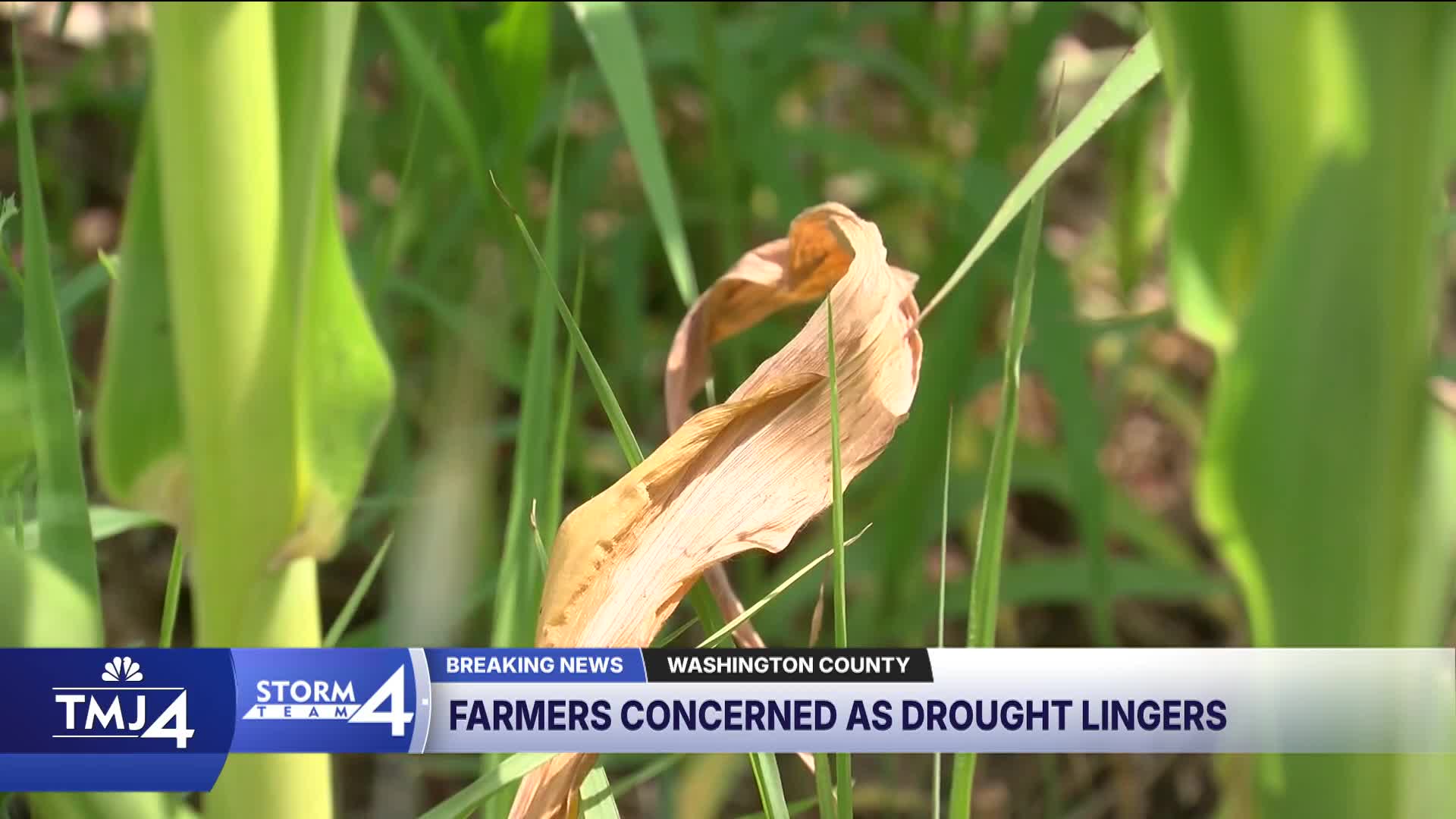


WEST BEND, Wis. — Wisconsin farmers are dealing with a dramatic turnaround this growing season, going from one of the wettest starts to spring on record to increasingly dry conditions across much of the state.
According to the U.S. Drought Monitor, more than 70% of Wisconsin is now either abnormally dry or in drought conditions. Just three months ago, nearly all of the state was at or above normal precipitation levels following an exceptionally wet spring.
Previous Coverage| Burlington produce farm battles wet fields, delays during key planting time
The rapid shift is now raising concerns for farmers heading into a critical stretch of the growing season.
“April being one of the wettest years … and now we have an extremely dry May, June, and July has been relatively dry as well,” said Rick Roden, owner of Roden Echo Valley near West Bend.
Watch: Wisconsin farmers face weather whiplash after wet spring
Roden operates a large dairy farm in Washington County, milking about 1,000 cows and farming nearly 3,000 acres of corn, soybeans, winter wheat and alfalfa hay.
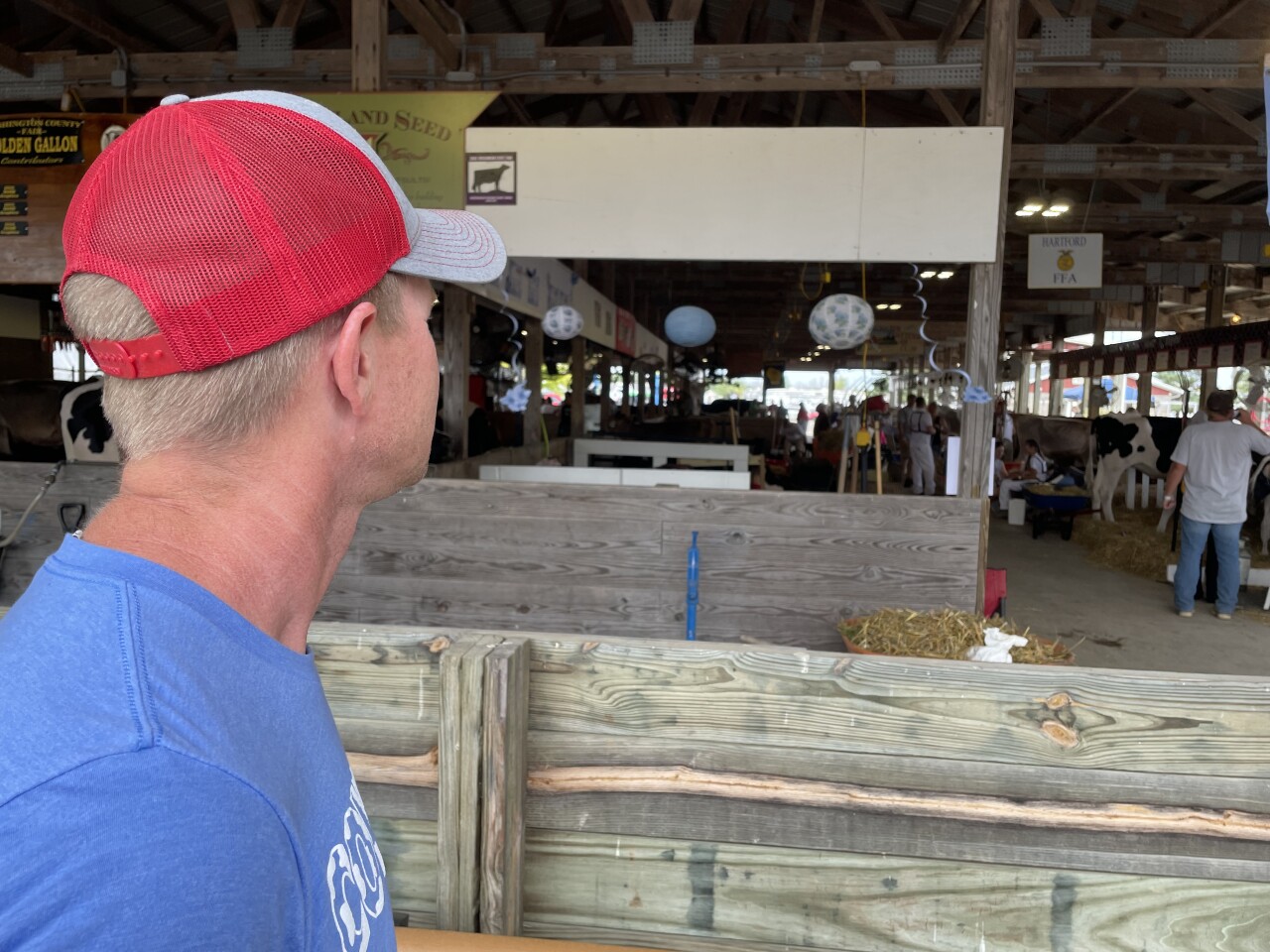
While attending the Washington County Fair with his family and livestock, Roden said the changing weather conditions have already started affecting some crops.
He said corn planted earlier in the season has performed better because roots had time to grow deeper into the soil and find moisture. But later-planted crops are struggling as dry conditions continue.
“You’ll see the leaves start kind of shriveling up and getting maybe more of a paler green color,” Roden said. “That’s when you know the plant is under stress.”

Roden said some later-planted corn fields could end up producing only a fraction of a normal harvest if rainfall does not arrive soon.
“If we don’t get some rain here shortly, that could be detrimental to the plants,” Roden said. “They may not get any bigger, and it’s going to really affect our yields in fall.”
The impact stretches beyond the fields.
As a dairy farmer, Roden relies heavily on corn and other crops to feed cattle throughout the year. Smaller harvests could force farmers to dedicate more acreage to livestock feed instead of grain sales, cutting into another source of farm revenue.
“For us as a dairy farmer, we need to make enough feed to be able to feed our cattle for a whole year,” Roden said.
He said dry conditions are also increasing fire concerns in rural communities, especially in fields and grassy areas that have not seen meaningful rainfall in weeks.
“Things are very dry,” Roden said. “Things can be very dangerous for fires.”
Despite the challenges, Roden said farmers are continuing to adapt and hoping timely rainfall can still improve conditions before harvest season arrives this fall.

“We just pray and hope every day that God gives us what we need to grow good crops,” Roden said.
This story was reported on-air by a journalist and has been converted to this platform with the assistance of AI. Our editorial team verifies all reporting on all platforms for fairness and accuracy.
It’s about time to watch on your time. Stream local news and weather 24/7 by searching for “TMJ4” on your device.
Available for download on Roku, Apple TV, Amazon Fire TV, and more.
