



MILWAUKEE — Poor air quality caused by wildfire smoke is keeping local auto shops and in-home air conditioning repair services busy in Milwaukee.
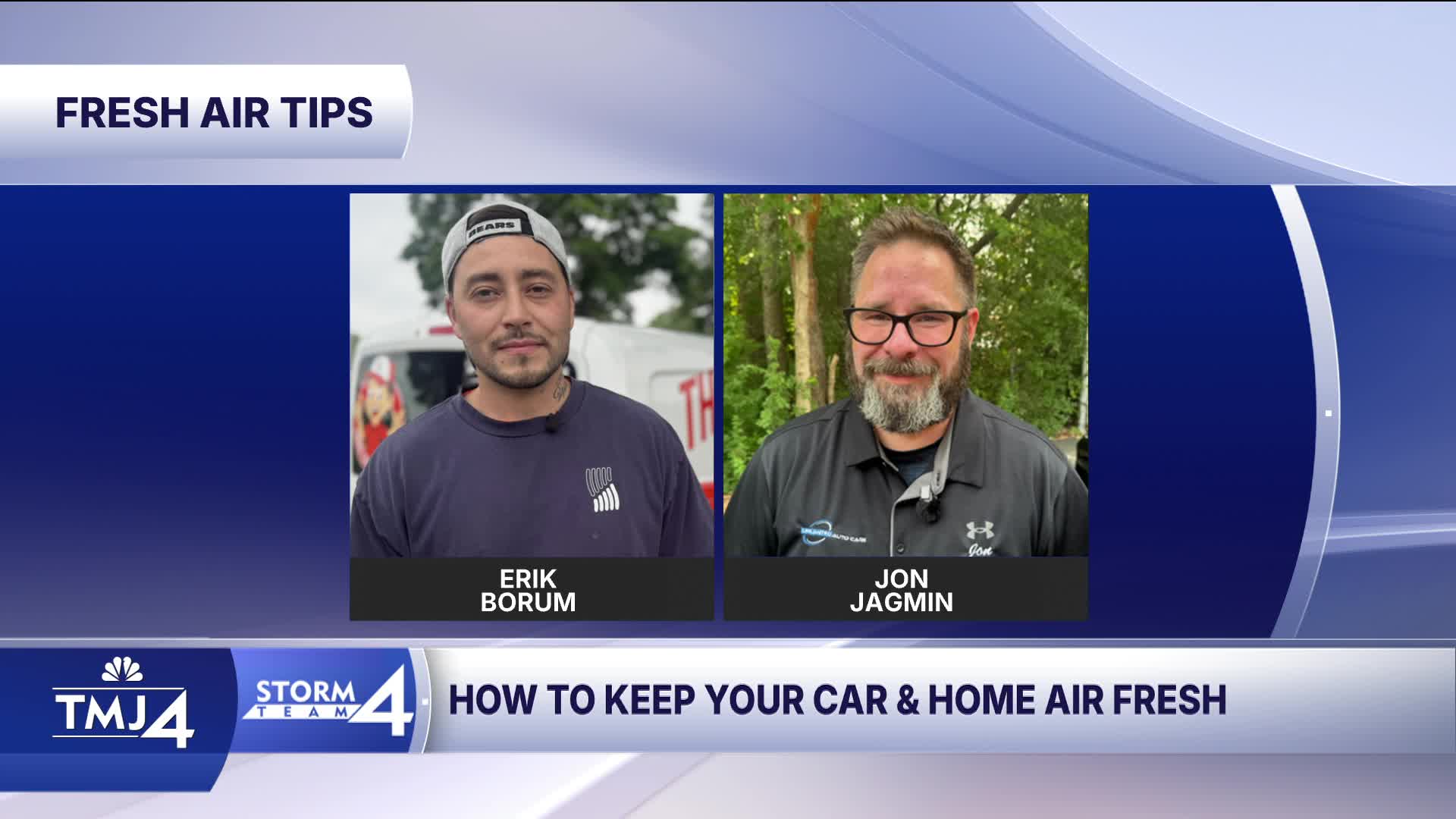
Erik Borum, a technician at Third Coast Heating and Cooling, said his company has seen an influx of calls this week due to the heat and extremely poor air quality caused by wildfire smoke from the north.

Borum said one easy way to check whether your home air filter needs replacing is to hold it up to the light.
"A trick that I like to use: you can actually grab a filter, hold it up to the light so you can actually see through. If you can see through it, then you know it's still good to go, and if you can't see through it, then you know it's pretty much clogged," Borum said.
Watch: What Milwaukee experts want you to know about breathing safer during wildfire smoke
He said homeowners should keep their air conditioning running even when leaving the house, so air continues to circulate through the filter.
"Yeah, you want the air to continuously circulate, and it runs through a filter," Borum said.
For those who want to save energy, Borum said there is still an option to keep air moving.
"If you're not going to run your AC, you can keep it on fan on and AC off, that way at least the air is still circulating," Borum said.
Borum also recommended checking your filter's Minimum Efficiency Reporting Value (MERV) rating, which measures how effectively an air filter captures particles. He said a higher rating is better during periods of poor air quality.
"We usually recommend a MERV 8 to allow airflow through, but in this situation like this you want to go a little higher, like maybe 11 or 12, just to stop anything from passing through," Borum said.
The advice for drivers is similar. Jon Jagmin, store manager at Good Hope Service, said both the engine air filter and the cabin air filter need to be clean and free of restriction.

"Engine air filter, which will sit in the engine area. We want that to filter. And then more importantly - the cabin air filter. That's the one that sits inside, that's filtering air going inside. So we want these to be clean, with no restriction," Jagmin said.
Aside from clean filters and limiting time with doors and windows open, both Jagmin and Borum said there is not much else drivers and homeowners can do to combat the poor air quality.
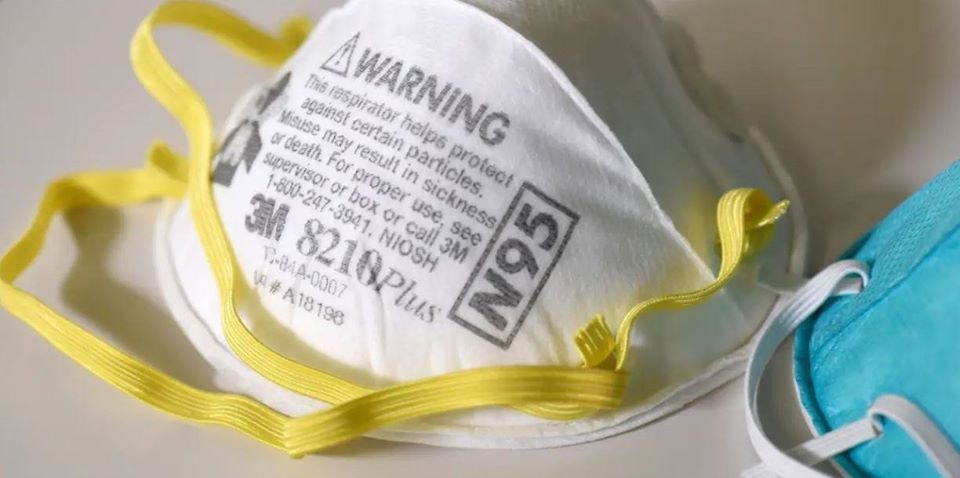
The U.S. Environmental Protection Agency (EPA) says wearing a mask, such as an N95 or P100, can help limit exposure. The mask should fit firmly over your nose and mouth, with 2 straps around your head. The EPA warns masks with only 1 strap or with straps around your ears will not seal tightly enough to protect your lungs.
Carissa Hoium, Program Leader of Environmental Health at the Children's Health Alliance of Wisconsin, said N95 and KN95 masks are specifically designed to filter out the pollutant most responsible for the current air quality concerns.
"N95 respirators and KN95 masks are designed to filter out fine particulate matter (PM2.5), the major pollutant in the air right now. PM2.5 is tiny enough to travel deep into your respiratory system and even get into your bloodstream, so preventing it from entering your body is key. Not all masks will filter PM2.5; surgical masks, cloth masks, bandanas, etc. will not filter out this tiny pollutant," Hoium said.
Hoium said staying indoors is the top recommendation, but a proper mask is essential if going outside is unavoidable.
"We recommend staying indoors, but if you MUST go outside, we recommend the masks that will filter out PM2.5," Hoium said.
This story was reported on-air by a journalist and has been converted to this platform with the assistance of AI. Our editorial team verifies all reporting on all platforms for fairness and accuracy.
It’s about time to watch on your time. Stream local news and weather 24/7 by searching for “TMJ4” on your device.
Available for download on Roku, Apple TV, Amazon Fire TV, and more.

