

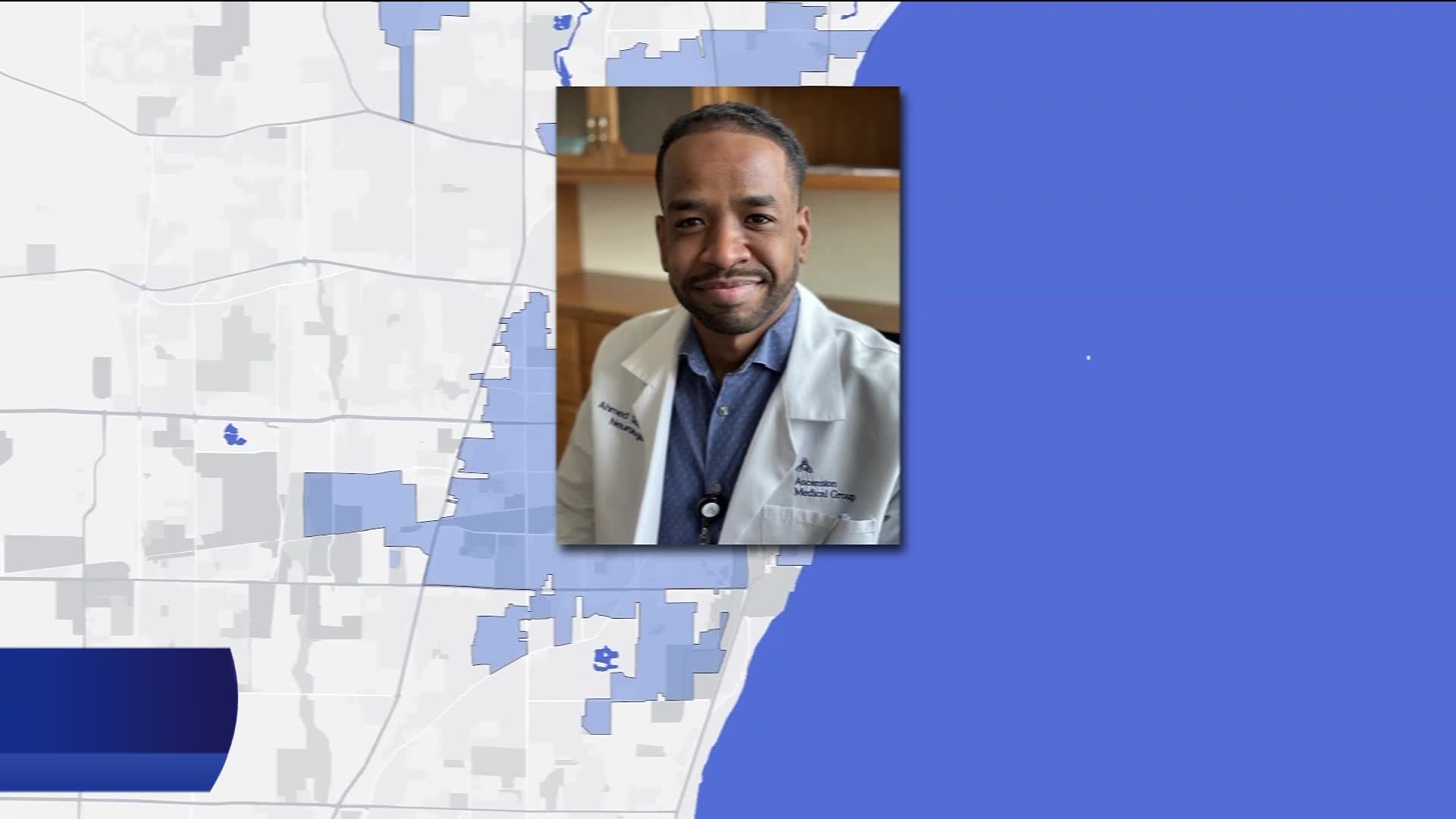


RACINE — A neurologist in Racine is using his background and expertise to better serve the area's community of color.
"Improving the outcome, building a relationship with my patients, helping with access, getting to see the patient sooner," Dr. Ahmed Siddig said.
Dr. Siddig works as a neurologist at Ascension All Saints Hospital, where he says he is proud to serve an underserved community — especially when it comes to specialty care.
"There's a very high need for neurologists everywhere, almost everywhere, and especially in underserved areas," said Siddig, who is from Sudan, where he went to medical school, and then completed his residency in Brooklyn.

Siddig says long wait times for providers and challenges such as finding reliable transportation can contribute to populations being underserved. Socioeconomic status can further create problems for stroke patients.
"This disability can lead to even lower socioeconomic status and more neurological disorders, and it can be a vicious cycle," Siddig said.
He says access to care and health education are key for patients' success, but that access to stroke care remains a challenge in the area.
Watch: Racine neurologist works to improve access and representation in neurology for communities of color
"There's not a lot of neurologists in the area," Siddig said.
Beyond access, Siddig is passionate about representation in the field and for the people he serves. Data from the American Academy of Neurology shows that while 14.4% of the U.S. population identifies as Black, 3.6% of neurologists in the country are Black.
"So bridging that gap is going to be very helpful to improve the outcome of people who have neurological disorders, especially people of color," Siddig said.
In the city of Racine, Black residents make up about 20% of the population, according to U.S. Census data.
"I think representation really matters, so that's one of the reasons that I decided to go into neurology," Siddig said.
He says representation has a direct impact on patient outcomes.
"When patients feel connected with their physician, they are more likely to put trust in you. They are more likely to follow the medical advice. They are more likely to take care of their self and their health," Siddig said.
This Black History Month, Siddig is reflecting on what representation in a field like neurology could mean for younger generations.
"When you follow someone's steps who looks like you, you are more likely to achieve your goal," Siddig said.
This story was reported on-air by a journalist and has been converted to this platform with the assistance of AI. Our editorial team verifies all reporting on all platforms for fairness and accuracy.
It’s about time to watch on your time. Stream local news and weather 24/7 by searching for “TMJ4” on your device.
Available for download on Roku, Apple TV, Amazon Fire TV, and more.
