

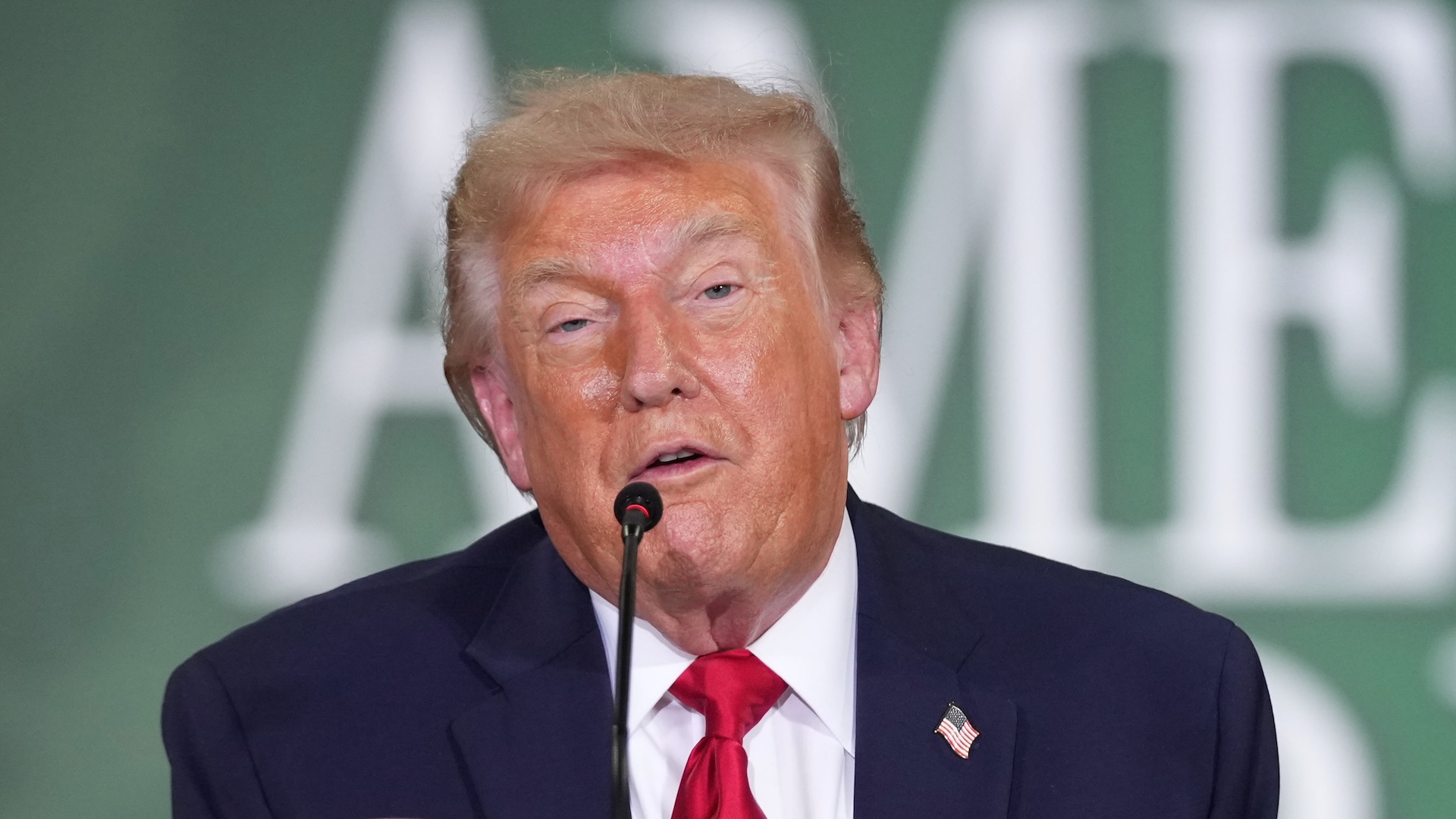


President Donald Trump was in Chippewa County, Wisconsin, Friday, touting a promising jobs report and other measures the administration has highlighted as support for U.S. farmers.
"We love the farmers, we love everything about your state," the president said at a rally in Chippewa Falls.
The White House has framed tax cuts, deregulation and tariff policies as beneficial for farmers. It has issued waivers to promote the sale of E15 gasoline, using ethanol derived from corn crops; set new requirements for biodiesel production and proposed new rules that would lessen regulations on U.S. waterways.
Trump sought to reassure his audience that the U.S. war against Iran was necessary, and would eventually drive gas prices back down.
“As they say in the farming business, we had to take care of business,” Trump said.
But the president also spent time discussing cosmetic projects in Washington, and suggested he would need to speed the event along.
"We’ll go pretty quickly because I have to get back to fighting a war in Iran," he said.
“What the hell do I have to be here for?” President Trump said at one point. “I could be home right now at the beautiful White House, enjoying someone else on television talk.”
RELATED STORY | US job market extends winning streak with 172,000 new positions in May 2026
The agriculture-focused visit comes as the U.S. labor market again defied expectations in May.
Employers added 172,000 jobs, marking the third consecutive month of gains, the Bureau of Labor Statistics reported Friday. Leisure and hospitality, local government, and health care posted the largest gains.
The unemployment rate held steady at 4.3%. While the number of people experiencing short-term unemployment declined, the share of Americans in long-term unemployment — defined as being out of work for at least 27 weeks — increased.
