


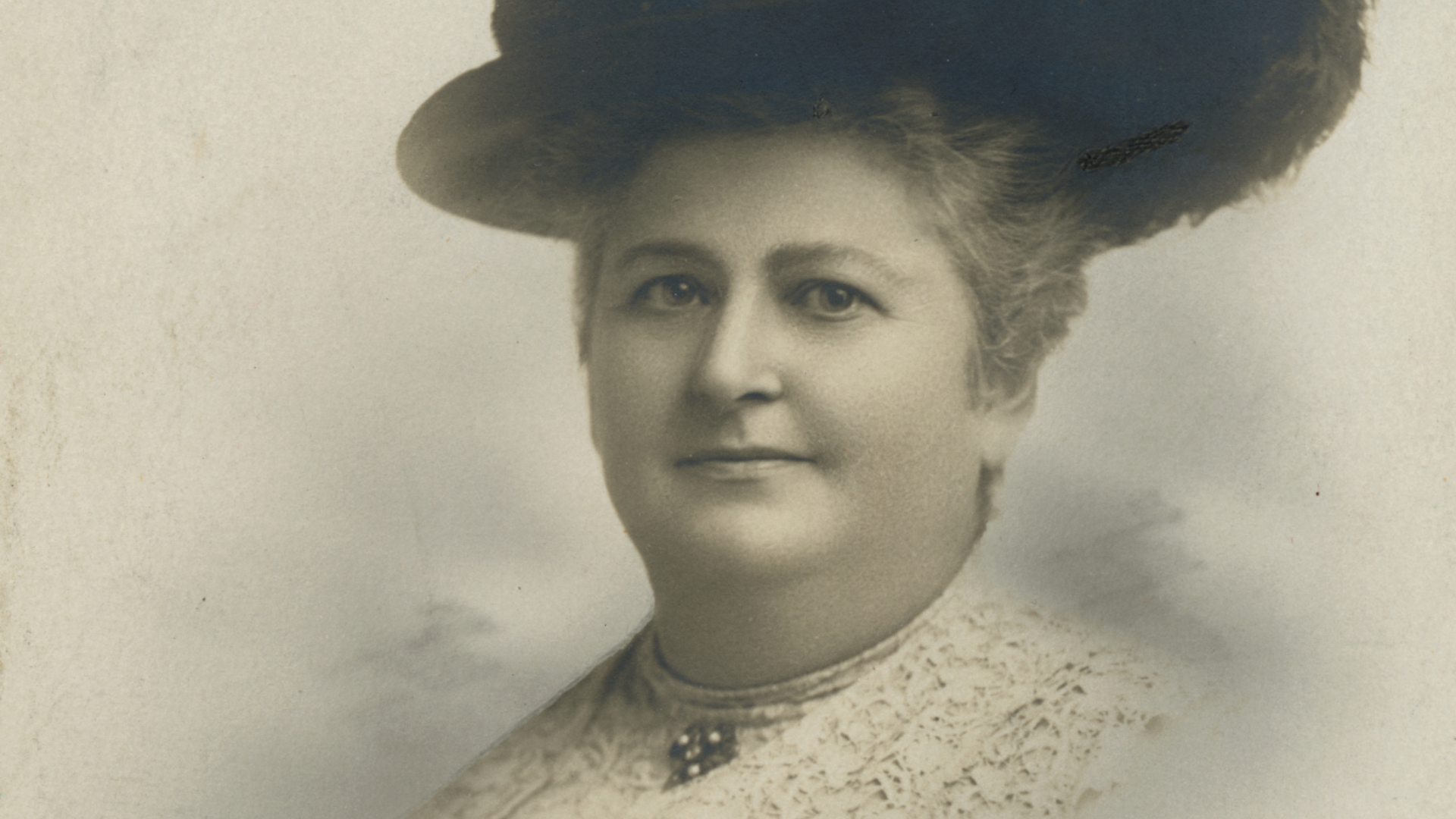

WHITEFISH BAY — A pioneer. An activist. The mother of the Jewish Community Center as we know it today. Lizzie Black Kander was a Jewish community and social activist who changed the lives of people in Milwaukee.
Kander was born in 1858 to immigrant parents. She was anything but typical. In the late 1800s and early 1900s, Kander dedicated her life to serving the Jewish community, feeding the hungry, and helping recently arrived immigrants assimilate into American culture.
Lizzie Kander had large aspirations early on and was committed to serving the public.

"In the East Side High School, she was the valedictorian. At her speech, the speech was entitled 'When I am President' and encouraged people to put her name on the next ballot," Molly Dubin, the Chief Curator of the Jewish Museum Milwaukee, said.
Kander was one of the first people to work at the Settlement House in Milwaukee. It was a place where classes were taught to recently arrived Russian Jewish immigrants, offering everything from public baths to language lessons and fitness courses.
"It's really about acclimation in many ways. It's coming to a new country and not understanding the etiquette, not understanding some of the new innovations like a freezer box or how you might set a table," Dubin said.

Cooking classes were the most popular. But as Kander was teaching the course, she realized students needed a textbook of sorts to bring the lessons home.
"She thought we really need to figure out a way to print these, to put these into a printed form, into a booklet that these women and young girls can take home," Dubin said.
She approached the all-male board of the Settlement House, asking for $18 to help publish a cookbook. They denied her request, so she raised the money on her own.
In 1901, Kander published "The Way To A Man’s Heart - The Settlement Cookbook." She did not publish it for her own profit; instead, book sales funded programs at The Settlement House. From 1901 to 1991, 40 editions were published, selling more than 2 million copies.

"Ended up raising the funds for decades of Jewish communal life and the agencies that grew to become the JCC," Julie Lookatch, the Chief Communications Officer at the Harry and Rose Samson Jewish Community Center, said.
Lookatch owns a copy of "The Way To A Man’s Heart - The Settlement Cookbook" that is well-loved. There are many grease marks and torn pages. This particular copy is the same one her grandmother used when making her dad’s favorite birthday treat, a pineapple wheel cake.
"And I’ve always wondered about that cake he used to talk about, so being able to find the recipe and really help that connect me with my dad was really meaningful to me," Lookatch said.
Kander’s recipes are still being used, by people like Lookatch, 125 years after they were first printed. However, the book didn’t just have recipes. It was an extension of The Settlement House programs, teaching valuable skills to anyone in the world. The book was eventually inducted into the James Beard Cookbook Hall of Fame.

"But she was very much about having it be an American cookbook, so there are things in this cookbook that are not kosher," Lookatch said.
The book reflected the cultural melting pot of America, featuring recipes from China and the Middle East.
Kander’s work didn’t stop with the cookbook. She was a truant officer encouraging students to attend class, served on the Milwaukee public school board, established a girls' technical high school, led food donations during World War I, and organized a food exchange during the Great Depression.
"(She) gave people the notion that this is a necessity, helping others is a necessity, and if we can all do that, we can all maybe contribute to making the world a better place," Dubin, the curator at the Jewish Museum Milwaukee, said.
Kander died in 1940, but her legacy lives on. Her cookbook and its assets were given to the Greater Milwaukee Foundation, which continues to impact the city. The recipes, like the pineapple wheel cake, can still be tasted today, and you can buy Kander's cookbook in places like the Milwaukee Jewish Museum.
Watch the story on Lizzie Kander to see her cookbook evolve through the ages...
This story was reported on by James Groh and has been converted to this platform with the assistance of AI. Our editorial team verifies all reporting on all platforms for fairness and accuracy.
It’s about time to watch on your time. Stream local news and weather 24/7 by searching for “TMJ4” on your device.
Available for download on Roku, Apple TV, Amazon Fire TV, and more.