

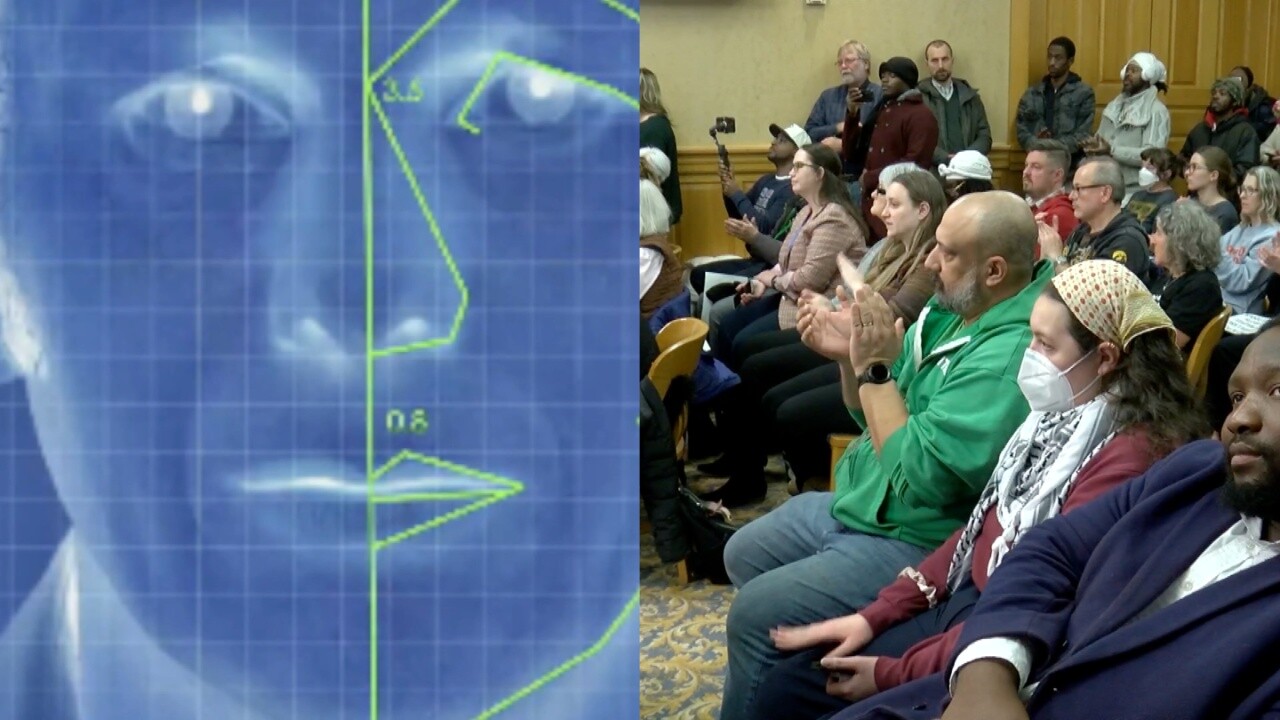


MILWAUKEE — Milwaukee Police Chief Jeffrey Norman will issue a ban on the use of facial recognition technology effective immediately, according to an email to city leaders obtained by TMJ4 News.
PREVIOUS COVERAGE: MKE police chief outlines facial recognition limits as residents voice concerns
The memo came less than 24 hours after the Milwaukee Fire and Police Commission heard hours of public testimony Thursday night as the city grappled with whether police should adopt facial recognition technology.
At the meeting, community members raised concerns about privacy invasion, human error, technology abuse, and misidentification — concerns Milwaukee police told city leaders have been heard.
Previous coverage: Should Milwaukee police use facial recognition tech?
In the email obtained by TMJ4, the spokesperson said Milwaukee police will “voluntarily issue a moratorium on the use of any and all facial recognition technology (FRT) for the department.”
According to the email, the decision was made to prioritize the public’s trust. However, the department added that it believes FRT is useful in “generating leads for apprehending violent criminals.”
"I think for them to put a moratorium, I think that that's an important victory," said Emilio De Torre, a community advocate who has attended months of meetings urging MPD not to use the technology.

De Torre called it a temporary win but acknowledged the debate isn't over.
"I think that it's just a time out. I'm glad that they're going to study it," De Torre said.
Community advocates have raised concerns about privacy violations and the potential for misidentifying individuals through the technology.
"The privacy concerns are a big deal," De Torre said. "It's a matter of time before someone uses and abuses it."
However, some law enforcement professionals argue the technology could help solve crimes that might otherwise remain unsolved.
Eric Draeger, a retired MPD detective, explained how the technology works.
"It takes the pattern of all the facial features of a person and condenses that down to a mathematical algorithm and then searches for that in all the pictures it has access to," Draeger said.

Last year, MPD announced a technology company offered the department facial recognition capabilities in exchange for access to 2.5 million mugshots.
"No detective wants to arrest the wrong person ever," Draeger said. "I think a policy can be crafted that both protects civil liberties and produces good results for public safety for the people of Milwaukee."
MPD plans to work with city leaders to create a policy outlining how the technology could potentially be used in the future.
De Torre remains committed to the ongoing discussion about the technology's implementation.
"I care deeply about this," De Torre said.
Milwaukee Police Association issues statement
In response to the news of the memo, the Milwaukee Police Association issued the following statement expressing its concern and disappointment regarding MPD’s decision described in the email to city leaders:
“The Milwaukee Police Association is deeply concerned and disappointed by two recent decisions by MPD leadership that significantly limit the tools available to Milwaukee police officers: the implementation of new restrictions on vehicle pursuits and the voluntary moratorium on the use and acquisition of facial recognition technology. Both vehicle pursuit authority and modern investigative technology are critical tools that help officers protect the public, solve violent crimes, and safely apprehend dangerous offenders. Removing or restricting these tools does not eliminate crime or danger - it risks shifting that danger onto Milwaukee residents and the officers sworn to protect them. Vehicle pursuits are among the most difficult decisions officers make. Milwaukee police officers receive extensive training to evaluate risk, traffic conditions, and public safety before initiating or continuing a pursuit. Policies that prevent officers from pursuing individuals engaged in extremely dangerous driving behavior can embolden offenders who believe they can evade accountability simply by fleeing at high speeds. Reckless drivers do not become safer when officers are forced to disengage; they continue to pose a threat to neighborhoods, businesses, and families. Similarly, facial recognition technology is an investigative tool that can assist detectives in generating leads in violent crime cases. It does not replace traditional police work or serve as a basis for arrest without further investigation. When used responsibly and with appropriate safeguards, this technology can help identify violent offenders, support victims, and improve case clearance rates. The MPA fully supports thoughtful policy development, transparency, and community input regarding policing practices and emerging technology. However, removing critical tools altogether - rather than implementing responsible oversight and safeguards - unnecessarily limits law enforcement’s ability to keep the community safe. Public safety requires a balanced approach that provides officers with strong training, modern technology, and reasonable discretion to respond to dangerous and rapidly evolving situations. Milwaukee residents deserve effective policing strategies that prioritize both community trust and the ability to hold violent offenders accountable. The MPA remains committed to working with department leadership, policymakers, and community stakeholders to develop policies that protect civil liberties while ensuring officers retain the tools necessary to safeguard our city.”
It’s about time to watch on your time. Stream local news and weather 24/7 by searching for “TMJ4” on your device.
Available for download on Roku, Apple TV, Amazon Fire TV, and more.

