

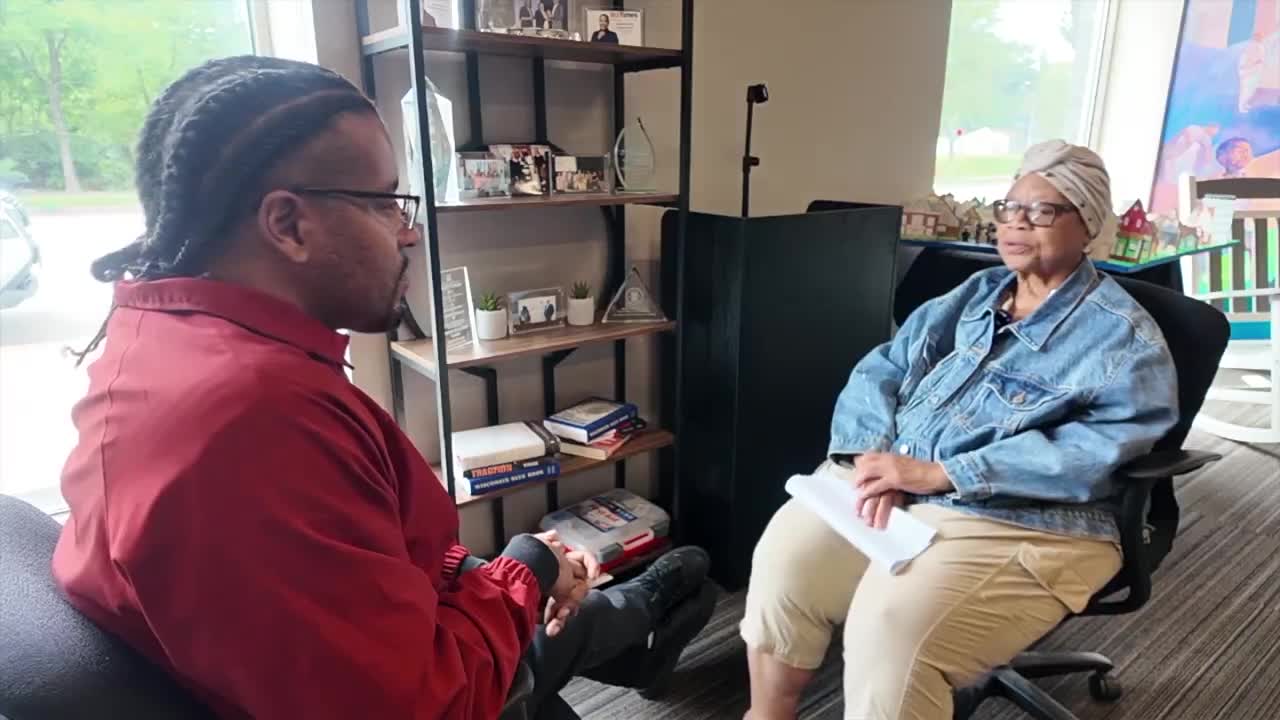

MILWAUKEE— Virginia DuPriest has watched her Lindsay Heights neighborhood change for most of her life.
Her parents bought their duplex in 1956 after their landlord kept raising the rent. DuPriest was 10 years old at the time.
See the full story in the video below
Seventy years later, the house is still standing and still in her family. Many of the homes around it are not.
"When we first moved there, there was at least 30 houses on the, on, on, on, you know, from both sides of the street in our block and there now there's not even, there's not even 10 houses on our block now," DuPriest said.

The empty spaces along her block help explain why Milwaukee housing leaders say displacement is more complicated than simply watching housing prices rise.
In some neighborhoods, residents are being pressured by rising rents and property values. In others, homes are disappearing because of years of disinvestment, deterioration and abandonment.
And sometimes those pressures are happening just blocks apart.
That is what the Community Development Alliance hopes to make easier to see with its new Displacement Risk Dashboard.
Putting numbers behind what residents already see
Created by Data You Can Use, the dashboard pulls together Census, property ownership, zoning, land-use and other public information to examine four different parts of neighborhood change: divestment, abandonment, displacement and gentrification.
The data currently compares conditions from 2014 to 2024.
Teig Whaley-Smith, chief alliance officer for the Community Development Alliance, said residents have been describing many of these changes for years. The challenge has been putting measurable data behind what they are experiencing.
"When you attach data to it, you're able to tell residents' stories along with them so that they can tell their personal story, and we can say this isn't just one person. They are speaking on behalf of an entire neighborhood. Here's the data to prove it," Whaley-Smith said.

The dashboard is not simply a map of neighborhoods where homes are becoming more expensive.
Whaley-Smith said understanding why a neighborhood is losing residents matters because the solution may be completely different depending on the cause.
The dashboard looks at divestment through indicators including the loss of homeowners and mortgage lending. Abandonment includes vacant homes, lost housing units and vacant lots. Displacement examines changes among households by income and race, while gentrification looks at increases in property values and rents.
What the dashboard shows around Virginia's neighborhood
DuPriest lives near the border of two census tracts in Lindsay Heights.
During a demonstration of the dashboard, Whaley-Smith said her census tract lost 22% of its homeowners over the 10-year period from 2014 to 2024.
The neighboring census tract lost 46%. The difference becomes even more striking when looking at the homes themselves.
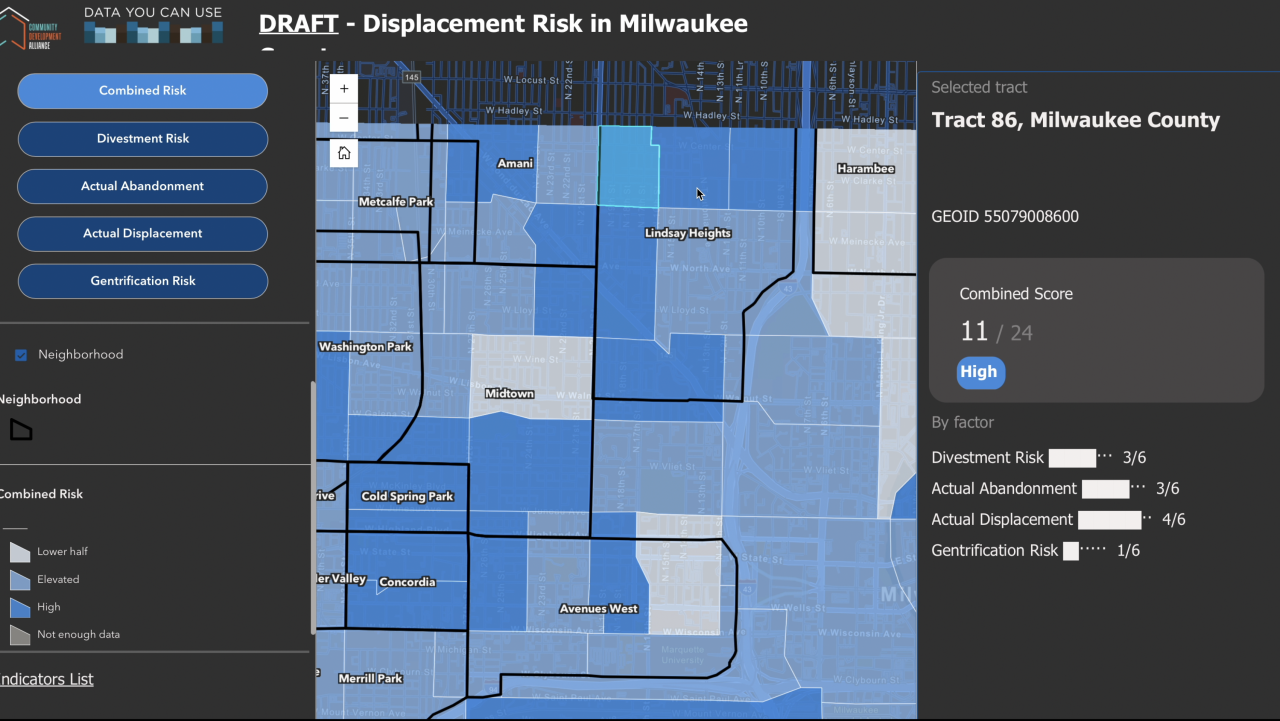
DuPriest's census tract lost about 1% of its housing units during that period, according to the dashboard. The neighboring tract lost 29%.
Whaley-Smith said that distinction is important because the data shows the displacement around DuPriest is not primarily being driven by rising rents or traditional gentrification.
The dashboard showed relatively low gentrification risk there.
Instead, Whaley-Smith said abandonment and the loss of housing are playing a major role. DuPriest has seen that happen one house at a time.
She said some longtime owners left homes to their children or grandchildren, who eventually sold them. Some became rental properties.
"We've had quite a few houses on the block that got torn down because the landlords didn't take care of them," DuPriest said.
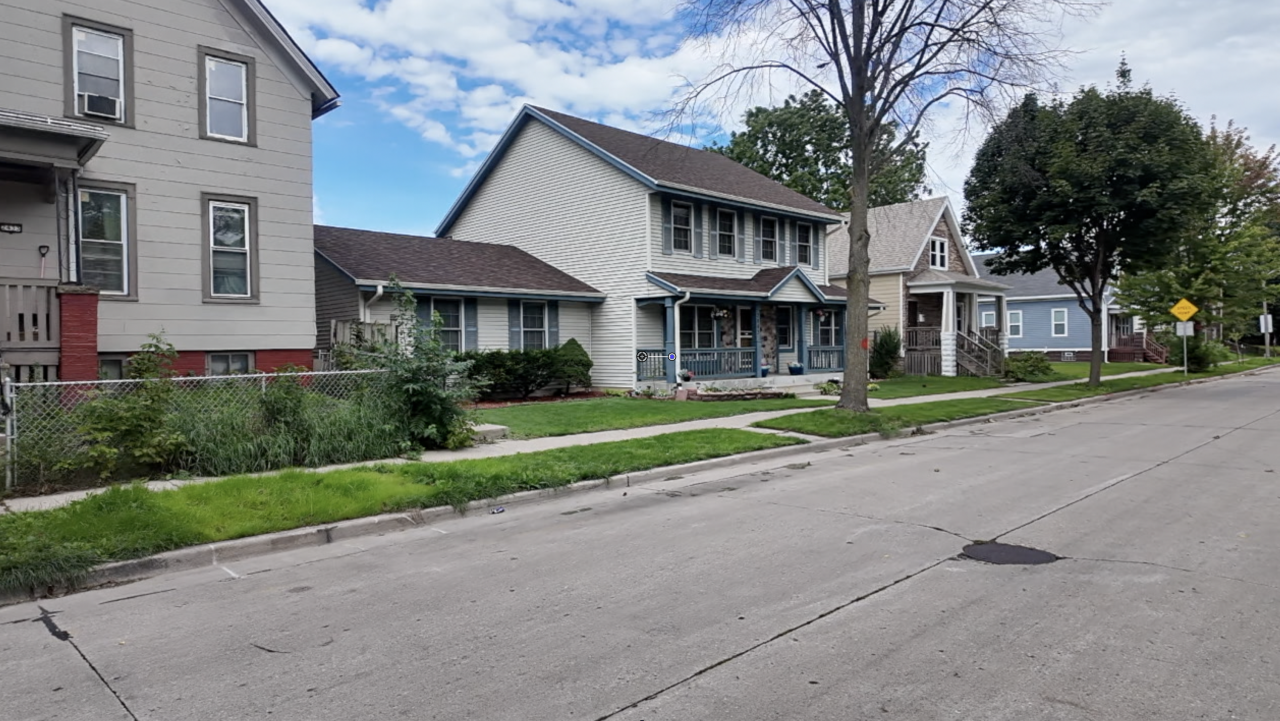
She said some landlords collected rent but failed to make necessary repairs. Eventually, she said, some houses became vacant and were demolished.
For Whaley-Smith, every demolished house represents more than an empty lot.
He said some Milwaukee neighborhoods have lost roughly 500 housing units over a 10-year period.
"500 housing units in a 10 year period, which means you've lost 500 families," Whaley-Smith said.
Displacement does not look the same everywhere
That may be one of the dashboard's most useful lessons.
A person living in one neighborhood may see vacant lots and disappearing houses.
A few miles away, another homeowner may be worried about rising property taxes, while a renter watches rent climb beyond what they can afford.
The dashboard showed examples of each.
In Washington Park, Whaley-Smith pointed to one census tract that lost 35% of its homeowners over the decade. He said only three new mortgages were originated in that tract during the period measured by the dashboard.
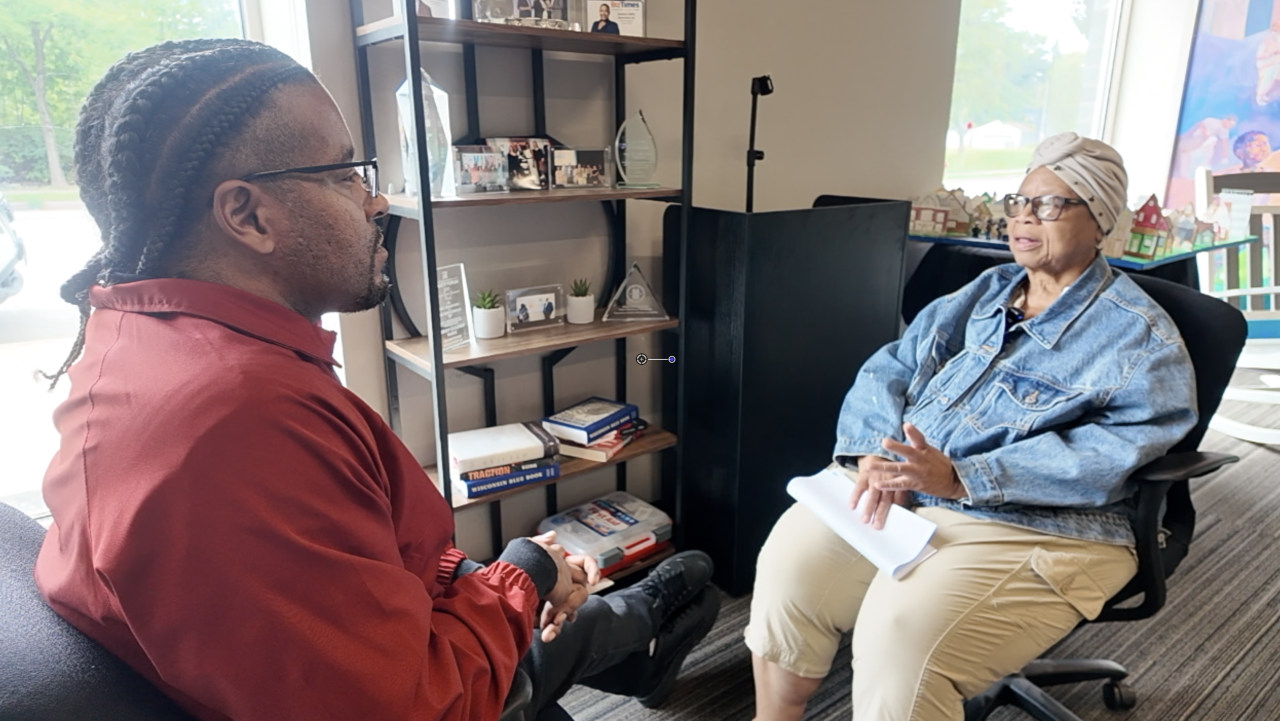
Another Washington Park tract lost 16% of its housing units.
But closer to downtown, the concern begins shifting toward rising property values and rents.
During the demonstration, Whaley-Smith pointed to an area in Bay View where the dashboard showed median home values increasing 93%, compared with a countywide increase of about 50%, while rents roughly doubled.
In the Midtown area, another example showed median home values rising 134%.
Whaley-Smith said even within Midtown, neighboring census tracts can tell very different stories — one showing signs of gentrification while another experiences displacement connected to property abandonment.
That means calling an entire neighborhood "gentrifying" or "declining" can miss what is happening block by block.
The City of Milwaukee has separately acknowledged the larger affordability pressure. City housing planning materials say the gap between local household incomes and median housing costs has grown significantly in recent years, while a limited supply of homes for sale has increased competition among buyers and investors.
Holding onto a home can be difficult even after decades
DuPriest's story also shows why displacement is not limited to renters.
Her family has owned its home for seven decades, but keeping an older house standing can be expensive.
The duplex was built in 1902. DuPriest said she has continually put money into repairs.
"I needed a roof on my house and the city did help, but it's a loan. I still got to pay that $30,000 back to the um city," she said.
DuPriest said one of her biggest frustrations is that some older homeowners earn just enough through Social Security, pensions or other income to fall outside the limits of assistance programs — but not enough to comfortably afford major repairs.
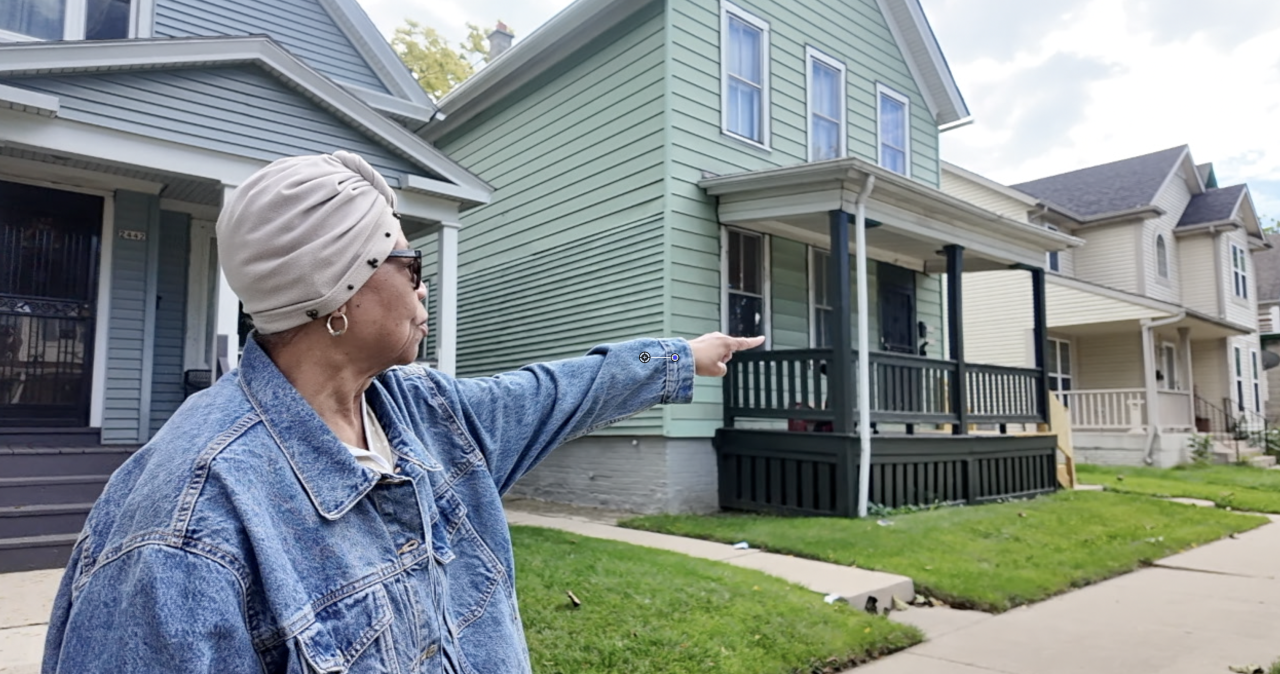
"We as older people less than worked all our lives, you know, and we're asking for help that we can't get because so many older people are, they lose their homes because they can't fix them up," DuPriest said.
She worries about what happens after a longtime homeowner can no longer afford the roof, electrical work, heating system or other major repairs an aging house requires.
A house can be sold. It can become a rental. If it deteriorates enough, it can eventually become another vacant lot.
That is the cycle CDA says it wants policymakers, funders and neighborhood organizations to identify earlier.
Abandoned properties affect more than one household
The issue has already become an enforcement concern for Milwaukee.
The City Attorney's Office filed major public nuisance actions this year against Highgrove Holdings Management and related companies, alleging widespread property neglect, vacancy, building-code violations and unpaid taxes at properties primarily on Milwaukee's north side.
That litigation is separate from the displacement dashboard, but City Attorney Evan Goyke highlighted the case during CDA's housing conference as an example of how property conditions can affect entire neighborhoods.
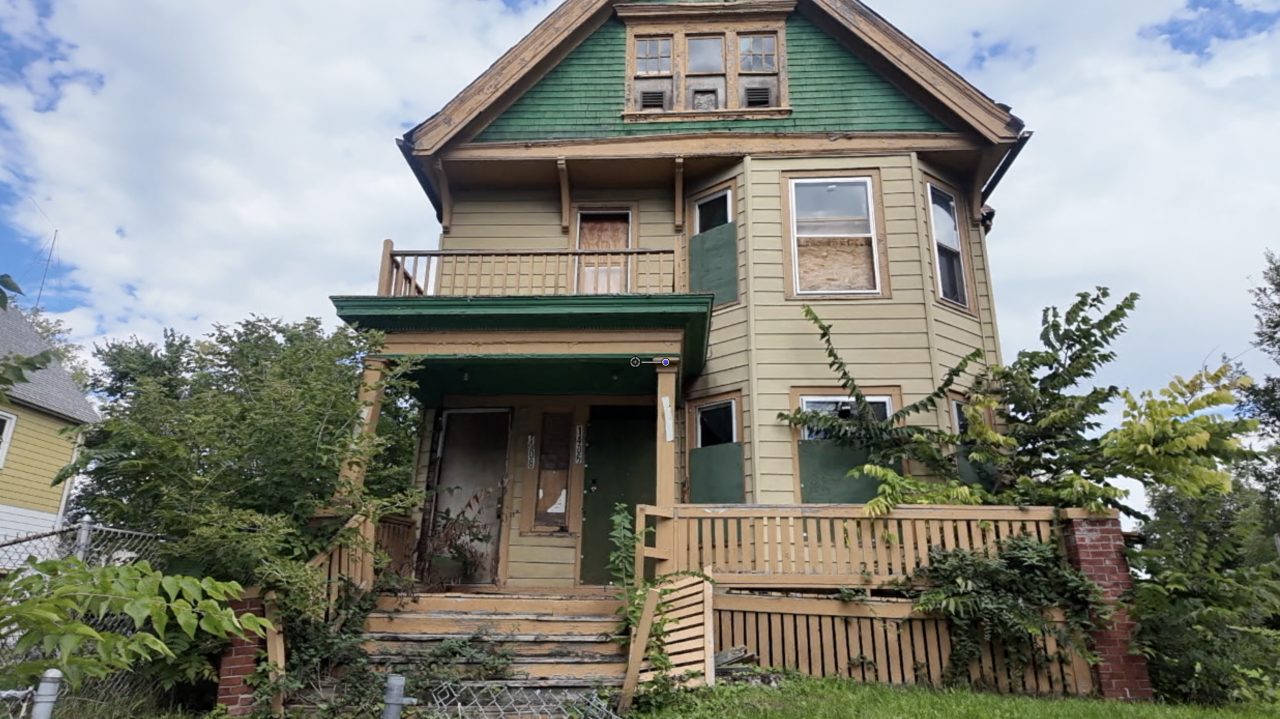
Whaley-Smith said the consequences of abandoned properties eventually spread to taxpayers as well because the public can be left paying for inspections, maintenance, demolition and management of vacant lots.
He also said the goal cannot simply be tearing buildings down.
The longer-term question is what replaces them — and whether the people already connected to those neighborhoods can afford what is built next.
Building without pushing people out
Whaley-Smith said the answer is not to stop development.
Some neighborhoods that have lost hundreds of houses need new housing.
The challenge, he said, is making sure new development restores housing without pricing out the people who already live there.
CDA is advocating for strategies including critical home repairs for existing homeowners, affordable financing, rehabilitation of existing properties and new homes that remain affordable and are reserved for owner-occupants.
Milwaukee is already pursuing some of that work through several housing programs.

As of Sept. 4, the city's Homes MKE program reported 79 houses fully renovated. Sixty-four had been sold for homeownership, 10 had occupants participating in rent-to-own programs, four were on the market, two were under contract and more than 20 additional homes were under renovation.
The city also says it prioritizes owner-occupants when selling city-owned residential properties and uses vacant land for new homeownership and affordable housing initiatives.
But the dashboard is intended to help organizations decide where those resources may make the biggest difference.
For Virginia, the numbers are personal
DuPriest is not simply someone whose neighborhood appears on the dashboard.
She serves on CDA's Resident Advisory Council on Housing and has spent years advocating for her neighborhood.
Her own house now spans five generations of her family.
She lives upstairs and has traditionally kept the downstairs available for relatives who need somewhere to live. She plans to leave the property jointly to her oldest grandson and granddaughter.
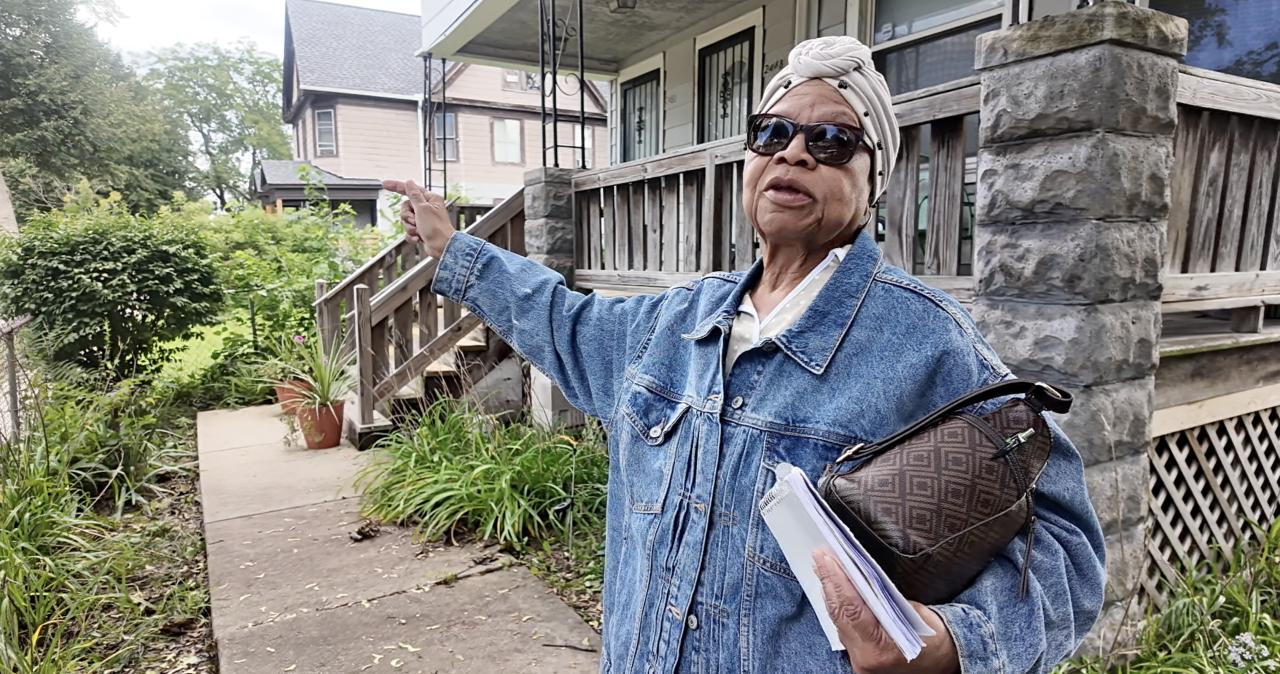
"I just want it to be a family house so that if someone gets in trouble or they need a place to stay that they'll have a place to come to to stay and they're not on the streets and that's what it's usually that's what it's been uh used for right now and I plan to leave it to my oldest grandson and my oldest granddaughter together and they are supposed to continue doing that," DuPriest said.
She has 10 grandchildren, 22 great-grandchildren and one great-great-grandchild.
For her, preventing displacement is not an abstract housing policy.
It means making sure the house her parents worked to buy in 1956 can still provide stability to their descendants decades from now.
"We'll always have a place to stay," DuPriest said.
When can residents use the dashboard?
The Community Development Alliance introduced the dashboard to more than 200 people at its annual conference on Sept. 16.
Whaley-Smith said CDA is making adjustments based on feedback from residents and housing partners before releasing it publicly.
He expects the public to have access in about a month.
The dashboard currently relies on Census data through 2024 and is expected to be updated annually as new data becomes available.
Residents who want to know when the dashboard launches can sign up through housingplan.org. Whaley-Smith said CDA staff can also work with neighborhood organizations to walk residents through what the data shows and discuss possible strategies.
The goal, he said, is not simply to identify neighborhoods in trouble after residents are already gone.
It is to recognize the warning signs early enough to do something about them.
CONTACT / MORE INFORMATION
Community Development Alliance: housingplan.org
Housing and data inquiries: ideas@housingplan.org
This story was reported on-air by a journalist and has been converted to this platform with the assistance of AI. Our editorial team verifies all reporting on all platforms for fairness and accuracy.
It’s about time to watch on your time. Stream local news and weather 24/7 by searching for “TMJ4” on your device.
Available for download on Roku, Apple TV, Amazon Fire TV, and more.

