

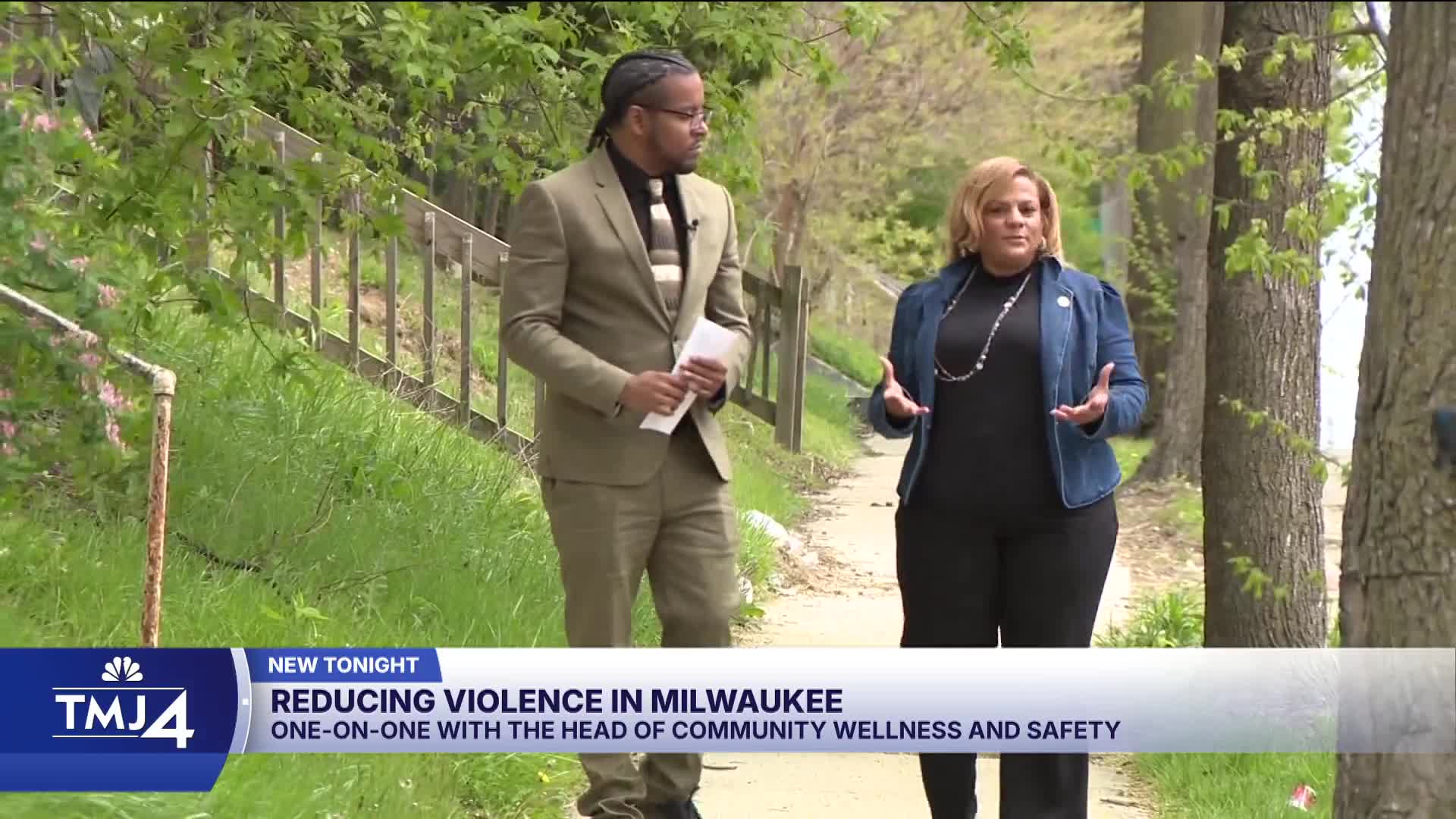


Karin Tyler grew up in the same 53206 Milwaukee neighborhoods now marked by gun violence, trauma, and fear. Today, she leads the city's new Department of Community Wellness and Safety — and the work is deeply personal.
In 2011, Tyler lost her oldest son to gun violence during a home invasion.
"I did lose my son to gun violence in 2011, so it was a home invasion, and he was my oldest son. You know it was just devastating. So that definitely is my why, why I'm here," Tyler said.
She describes her son as someone who brought energy and joy to every room.
"You know, I just think about his personality, how much life he had. He was like the, the person you wanted to see at the party. He was like the life of the party, you know, and just to have his life taken, you know," Tyler said.
Watch: Milwaukee's new community safety leader lost her son to gun violence. Now she's fighting to prevent it.
I met Tyler in the neighborhood where she grew up — a place she says still fuels her mission.
"We want these areas to look similar to the suburbs, and you know, just we want safety, we want community, we want an investment in these neighborhoods, so it's just important to always go back to where you started from," Tyler said.
Her roots run deep. Raised in a family with a history of activism, Tyler says those early experiences shaped her understanding of community and justice.
"You know, it's just interesting looking at my childhood home my, my parents were, uh, activists, so like in our home we would have like civil rights activists like Brother Booker, um, James Gray my dad was a commando. Um, so it brings back that that history I had like we were little girls doing marches for like the fair housing rights and different things like that," Tyler said.
Now, she says that lived experience gives her a unique voice in policy discussions.
"For sure, so I stand with mothers, survivors, you know, and it's just important because you know I, I can be in rooms with people that know this work, you know, in theory, but I can bring that level of personal experience that's needed in these discussions on what we need to do for the city," Tyler said.
Watch Gideon Verdin's full one-on-one interview with Karin Tyler:
Getting ahead of violence
For families living closest to the violence, Tyler says the department's name needs to mean something real.
"We wanna get ahead of violence before it even starts, you know, so we do that through citywide campaigns, education, talking to young people. And then if violence does occur, we want to also address it before it escalates even more," Tyler said.
When asked what residents are actually saying when outreach teams show up, Tyler said the message is consistent.
"That's a good question. Well, I, I just think what residents when we're out there what we hear is presence, you know, like where is everybody? where is our help," Tyler said.
Her strategy centers on outreach teams, interrupting retaliation cycles, reaching young people, and intervening before conflicts turn deadly.
"Retaliatory violence is very dangerous work, but it's very important work, so people may see the homicides that occur, but they don't see the ones that don't occur as a result of our work," Tyler said.
Tyler also pushed back on skeptics who question whether prevention-focused approaches are effective.
"Maybe that it doesn't work, you know, that it's not effective, but I think if they knew the things that we've stopped from elevating they would they would see the power of it, you know, because you gotta think when you call the police, the violence has already happened, so we have to get ahead of it," Tyler said.
She says outreach only works if it reaches the people who need it most.
"If the people that need it the most don't know about it, then that's a tragedy," Tyler said. "We're running towards the violence we want to get to that next person before they make a decision to possibly shoot someone or possibly be a victim of violence."
Building a network
Tyler says the department is also working to expand its reach through volunteers and community partnerships.
"Uh, we're going to expand on, um, a volunteer network too, so it just seems like people wanna do this work or want to support, but they may not know how so we wanna engage everybody because again it's gonna take so many different departments, communities, um, uh, community organizations," Tyler said.
Responding to critics
Some have questioned the department's impact and Tyler's accessibility. She acknowledged the criticism directly.
"I have so many things that I'm doing right now, and that's why my focus is getting staffed up so I can be more responsive in a more timely way for sure, but it's difficult because if a homicide comes in that might derail everything that I have on my schedule," Tyler said. "That doesn't mean it's not important to me."
What keeps her up at night
Despite the demands of the role, Tyler says she never loses sight of what is at stake.
"Another family who may be dealing with a homicide. So those are things that I think about for sure, um, so and I know it's not my ultimate responsibility, but now in this role I do feel a responsibility you know what it feels like for sure," Tyler said.
Her ultimate goal is a city transformed — and a community that owns that transformation.
"To see those historic lows, to feel safer, to feel more hope, I want even the messaging coming from the community, we did this together, we changed our city around for the better," Tyler said.
This story was reported on-air by a journalist and has been converted to this platform with the assistance of AI. Our editorial team verifies all reporting on all platforms for fairness and accuracy.
It’s about time to watch on your time. Stream local news and weather 24/7 by searching for “TMJ4” on your device.
Available for download on Roku, Apple TV, Amazon Fire TV, and more.

