



MILWAUKEE — A blind Milwaukee County Transit System rider is raising concerns that ideas for bus route changes that are being shopped around right now could cut off access to work for people who are blind or visually impaired.
Jedidiah Moss, who is legally blind, relies on MCTS to get to his job at Beyond Vision. He is now speaking out about one of two concepts the transit system is considering as it works to address a nearly $16 million budget deficit.
"We don't want to see blind workers left behind," Moss said.
WATCH: Blind Milwaukee bus rider raises concerns about potential MCTS route cuts amid budget deficit
The concept drawing his concern — MCTS's "ridership concept" — would provide more frequent service but on fewer routes. MCTS acknowledges the change could mean longer walks for some riders, and some areas could lose service altogether.
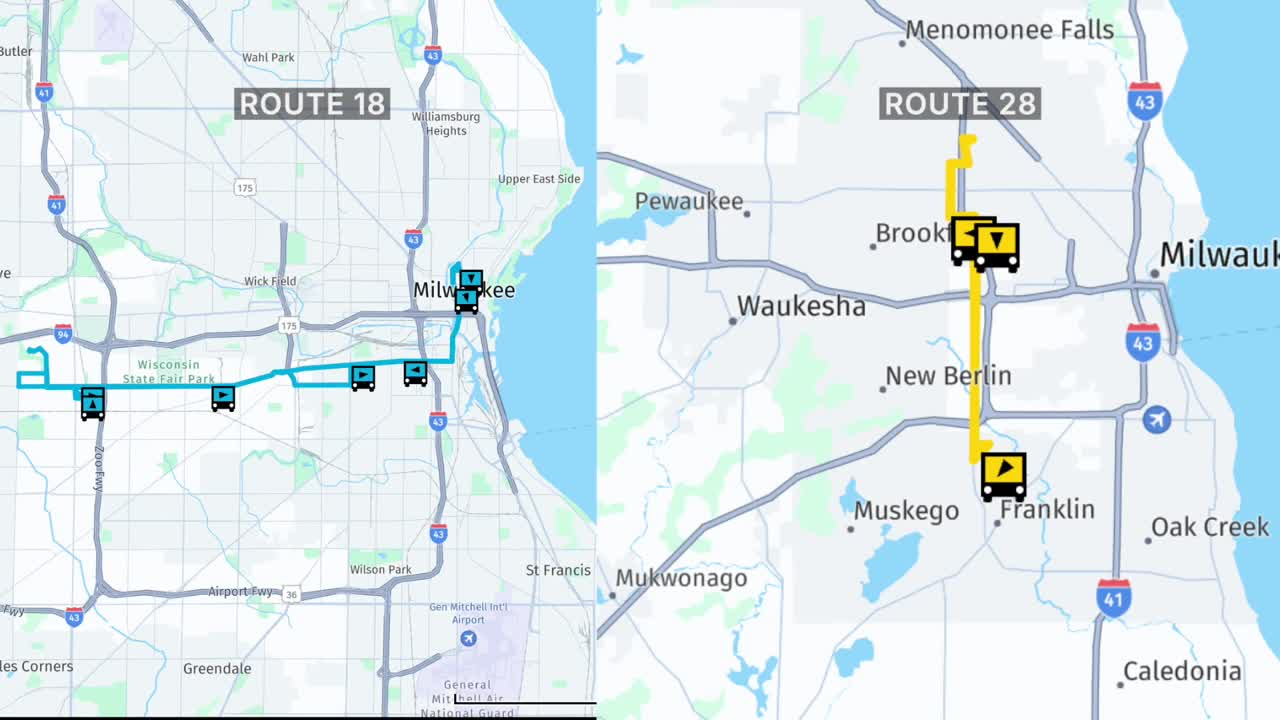
Moss says Routes 28 and 18 are especially important to visually impaired riders, connecting them to organizations that provide services and employment. Under the ridership concept, Route 28 would be eliminated and Route 18 would be trimmed, cutting off direct service to those locations.
"Our entire manufacturing floor and some of our office staff wouldn't even be able to get to work at all," Moss said.
Moss says he has spoken out at public feedback meetings but felt dismissed. He also emailed the TMJ4 newsroom, writing that the ridership concept "seems to be very popular" but would be "extremely harmful to the blind community of Milwaukee County."
"There's a lot of people like myself who have moved from very far away to work so we can contribute and pay taxes and build lives here only to find out that the service that we need to get to work could be cut because ridership is an important metric," Moss said.
TMJ4's Ryan Jenkins brought those concerns to MCTS Senior Director of Public Affairs and External Relations Brian DeNeve.
"It is not our goal to dismiss anyone," DeNeve said.
DeNeve said public feedback is critical and that MCTS is gathering it through 5 open houses, and more than a dozen community tabling sessions. There is also an online survey. He said organizations including Beyond Vision and Independence First are also part of the system's stakeholder group, along with the county's center on aging and disability services.
"That's one reason Beyond Vision and Independence First, and the county's center on aging and disability services are all part of our stakeholder group," DeNeve said. "Their voice is very important to us."
DeNeve said the goal is to listen to the community and eventually finalize new routes that address the budget issues while still offering valuable and representative services for riders.
Moss said he hopes the needs of blind riders remain central to that decision.
"Public transportation is supposed to be a service for the people who really need it," Moss said. "And if the service fails the people who really need it then the service becomes a failure."
It’s about time to watch on your time. Stream local news and weather 24/7 by searching for “TMJ4” on your device.
Available for download on Roku, Apple TV, Amazon Fire TV, and more.

