



MILWAUKEE — Buy now, pay later has exploded in popularity, letting shoppers split purchases into smaller payments, but new data shows more people are now relying on these loans to make ends meet, using them to afford basic necessities like groceries.
New data from LendingTree shows nearly 1 in 3 buy now, pay later users are turning to these short-term loans to pay for groceries as high prices continue to stretch household budgets.
At the same time, LendingTree says 47% of buy now, pay later users have paid late on one of these loans in the past year.
Watch: One Milwaukeean gives their money advice:
It's fast, it's easy and for many shoppers, it doesn't even feel like debt.
But debt relief experts caution that one of the biggest problems with buy now, pay later, or BNPL, is how easy it can be to lose track of what you owe.
"It really sort of mirrors what we're seeing here," Thomas Nitzsche of Money Management International said.
Nitzsche said people often underestimate how the loans stack up.
"What we see is that people tend to use them as an extension of their income," Nitzsche said.
When asked whether buy now, pay later is safer than a credit card, Nitzsche said the structure of the loans does offer some guardrails.
"Well, it sort of forces you to pay it off quicker, which, you know, and most of the clients that I've talked to about BNPL actually have positive things to say," Nitzsche said.
If you find yourself regularly needing to finance groceries, experts say it may be time to take a harder look at your budget before the debt grows.
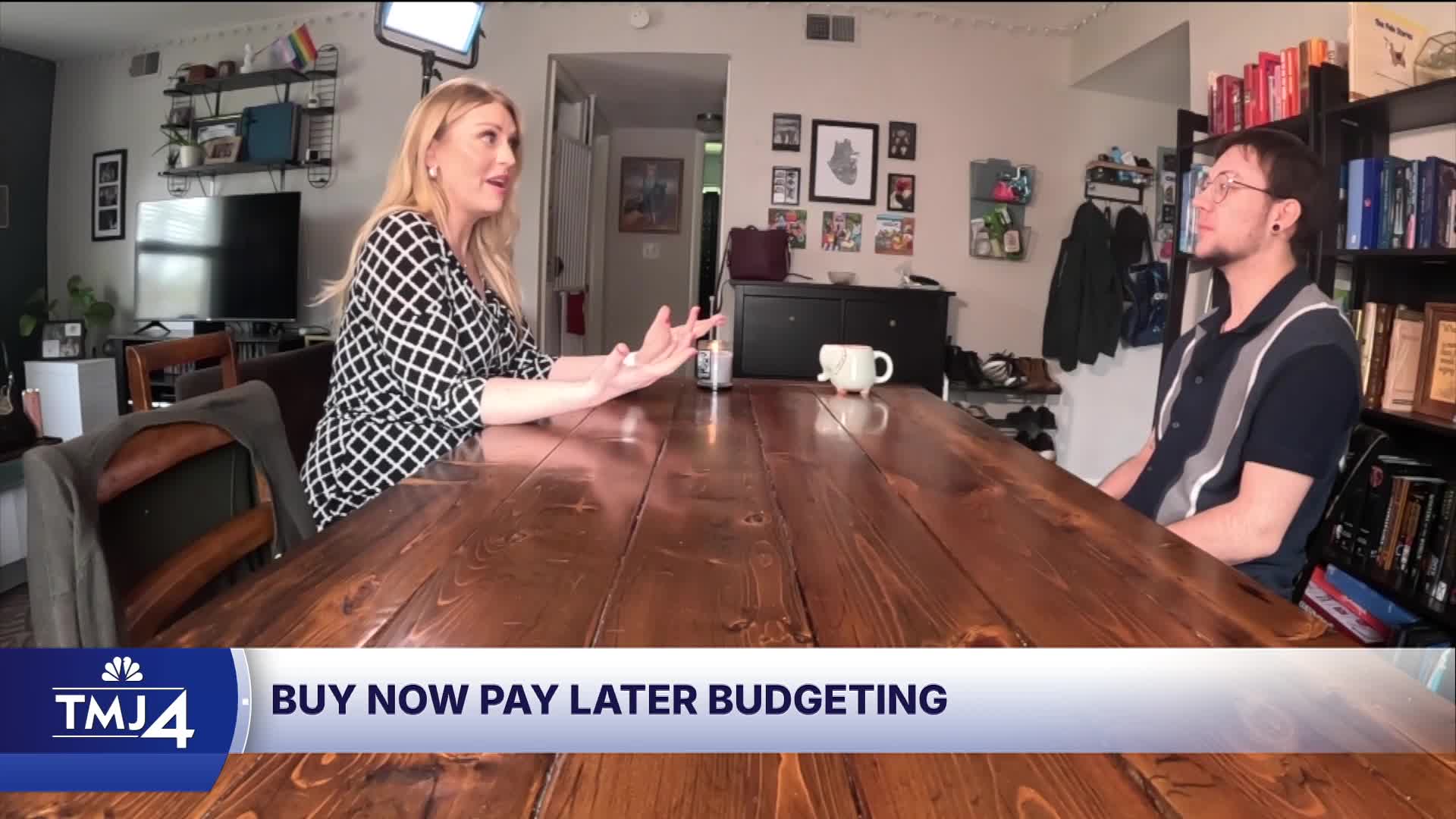
For Ky Lewandowski, buy now, pay later is a way to handle large, unexpected expenses — like veterinary bills for their cats.
But Lewandowski acknowledges the tool isn't always the right fit.
"For some things, I think maybe it's not as helpful," Lewandowski said. "I am pretty careful with how often I do it," they added.
Those money habits didn't come overnight. Lewandowski previously turned to Money Management International, a nonprofit debt counseling program, for help consolidating and paying off other debt, an experience that changed how they think about spending.
"My initial balance was like $25,000 and now I'm down to less than $9,000. It's just significant. It has changed my life significantly," Lewandowski said.
Now, they are on a path to financial security and taking steps toward a new dream. "I'm very excited about it. My dream has always been to own a home," Lewandowski said.
And they also had advice for others just beginning to navigate debt. "I would say if you've tried a lot of different avenues, definitely go for it," Lewandowski said.
For anyone finding themselves in over their heads, Nitzsche said the first step is creating a spending plan and that help is more accessible than many people realize.
"Nobody likes the word budget, right? It sounds negative, but to create a spending plan is really the baseline. You really have to understand what's coming in, what's going out, and make sure your money's working for you," Nitzsche said.
Nitzsche also encouraged people to set up automatic payments to avoid accidentally missing a due date, and to contact creditors directly if they are falling behind — noting that most are willing to work with borrowers.
"It's important to maintain open communication with your creditors. If you find yourself falling behind, first and foremost, try to automate those payments," Nitzsche said.
For those facing more serious financial hardship, Nitzsche said nonprofit credit counseling through organizations like Money Management International is available at no cost and can help reduce interest rates and create a path to becoming debt-free.
"We provide financial counseling at no cost. So, every year we help about 200,000 people across the country," Nitzsche said.
Nitzsche said stigma and shame are among the biggest barriers keeping people from seeking help, but that counseling is confidential and judgment-free. He added that for those not yet ready to speak with someone, online communities and AI tools can be a low-pressure starting point.
"I just encourage people to start to have conversations, even if it's with Chat GPT or if it's anonymously on Reddit or if it's with a counselor, because that really is the only way to find solutions," Nitzsche said.
Here are a few ways experts recommend staying on top of Buy Now, Pay Later spending:
TRACK EVERY PAYMENT
Write down every installment plan you currently have, including the amount, due date and app or company connected to it. Experts say many consumers lose track because payments are spread across multiple platforms.
TURN ON PAYMENT REMINDERS
Late fees can quickly add up. Setting automatic reminders or calendar alerts can help avoid missed payments.
LOOK AT THE FULL COST, NOT JUST THE SMALL PAYMENT
Financial counselors say installment plans can make purchases feel more affordable in the moment. Before clicking “Buy Now, Pay Later,” experts suggest asking: “Would I still buy this if I had to pay the full amount today?”
WATCH FOR THESE WARNING SIGNS
Experts say these may signal debt is becoming harder to manage:
• Using BNPL regularly for groceries or necessities
• Borrowing before payday
• Losing track of due dates
• Making late payments
• Opening multiple installment plans at once
KNOW WHEN TO ASK FOR HELP
Nonprofit debt counselors say many people wait too long before seeking guidance. They say creating a realistic budget and understanding where money is going each month can make a major difference before debt becomes overwhelming.
This story was reported on-air by a journalist and has been converted to this platform with the assistance of AI. Our editorial team verifies all reporting on all platforms for fairness and accuracy.
It’s about time to watch on your time. Stream local news and weather 24/7 by searching for “TMJ4” on your device.
Available for download on Roku, Apple TV, Amazon Fire TV, and more.
