

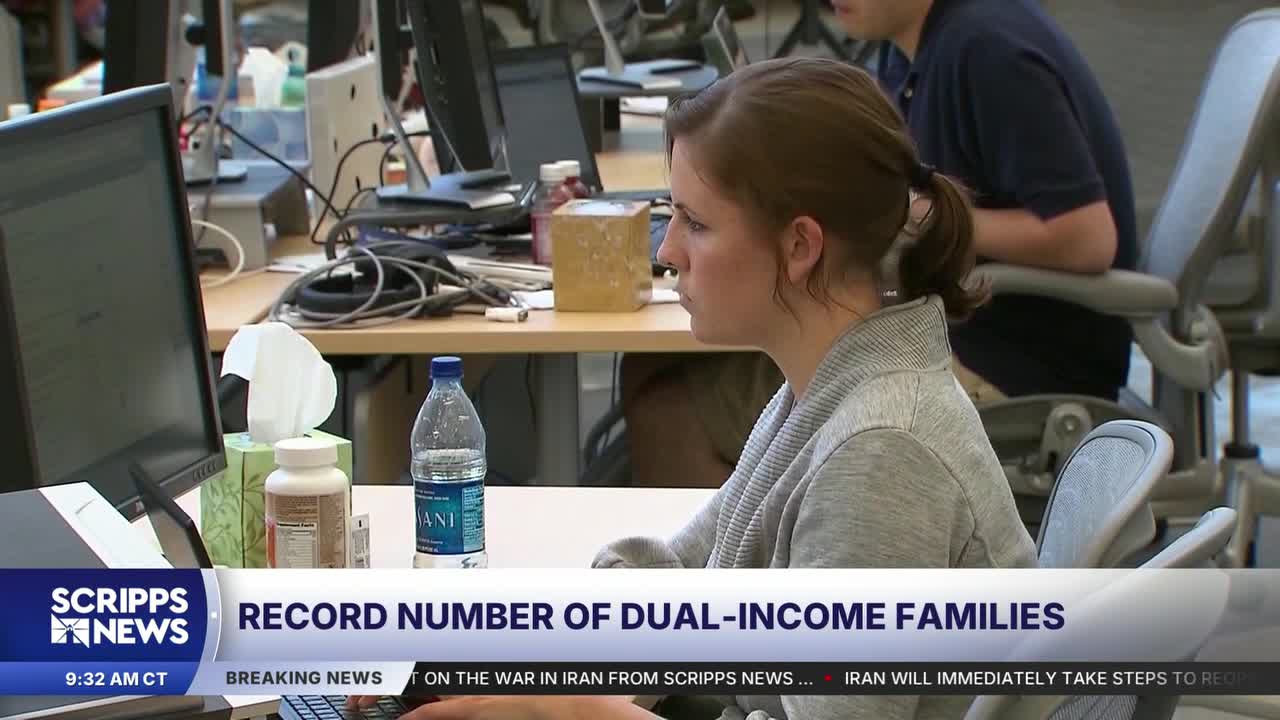


A record share of American families now have both parents working full time.
According to a new Pew Research Center study, 52% of two-parent households with children under the age of 18 are full-time dual-income earners — an increase of 21 points since 1975.
RELATED STORY | 64% of parents say money is tight. They want their kids to understand why
Meanwhile, the share of families where the father works full time and the mother isn't employed has dropped from 42% in 1975 to 23% last year, according to the survey. More than 8 in 10 parents cite finances as a reason for why both parents work full time, but less than half say it's had a positive impact on their children's well-being, and 22% say the effect has been negative.
It comes as the days of households earning $100,000 per year being considered upper-middle class appear to be coming to an end in some parts of the country.
IN CASE YOU MISSED IT | New inflation numbers show consumer prices are likely to keep rising
According to a recent report by MoneyLion, a household income of $100,000 would put families in 12 states into the lower-middle class — defined as households making anywhere from two-thirds to twice the annual median income.
The report found that residents of Massachusetts, New Jersey, Maryland, Hawaii, California, New Hampshire, Washington, Colorado, Utah, Connecticut, Alaska and Virginia all need household incomes of more than $100,000 to avoid being considered lower-middle class. Massachusetts had the highest threshold, with the top income for a lower-middle-class household at $116,476.
![SNG_Digital_Ad_480x360_CTA[13].jpg](https://ewscripps.brightspotcdn.com/dims4/default/765a37a/2147483647/strip/true/crop/480x360+0+0/resize/960x720!/format/webp/quality/90/?url=http%3A%2F%2Fewscripps-brightspot.s3.amazonaws.com%2F7d%2Fdb%2F0b14063144e881c22c4592637e0d%2Fsng-digital-ad-480x360-cta13.jpg)