

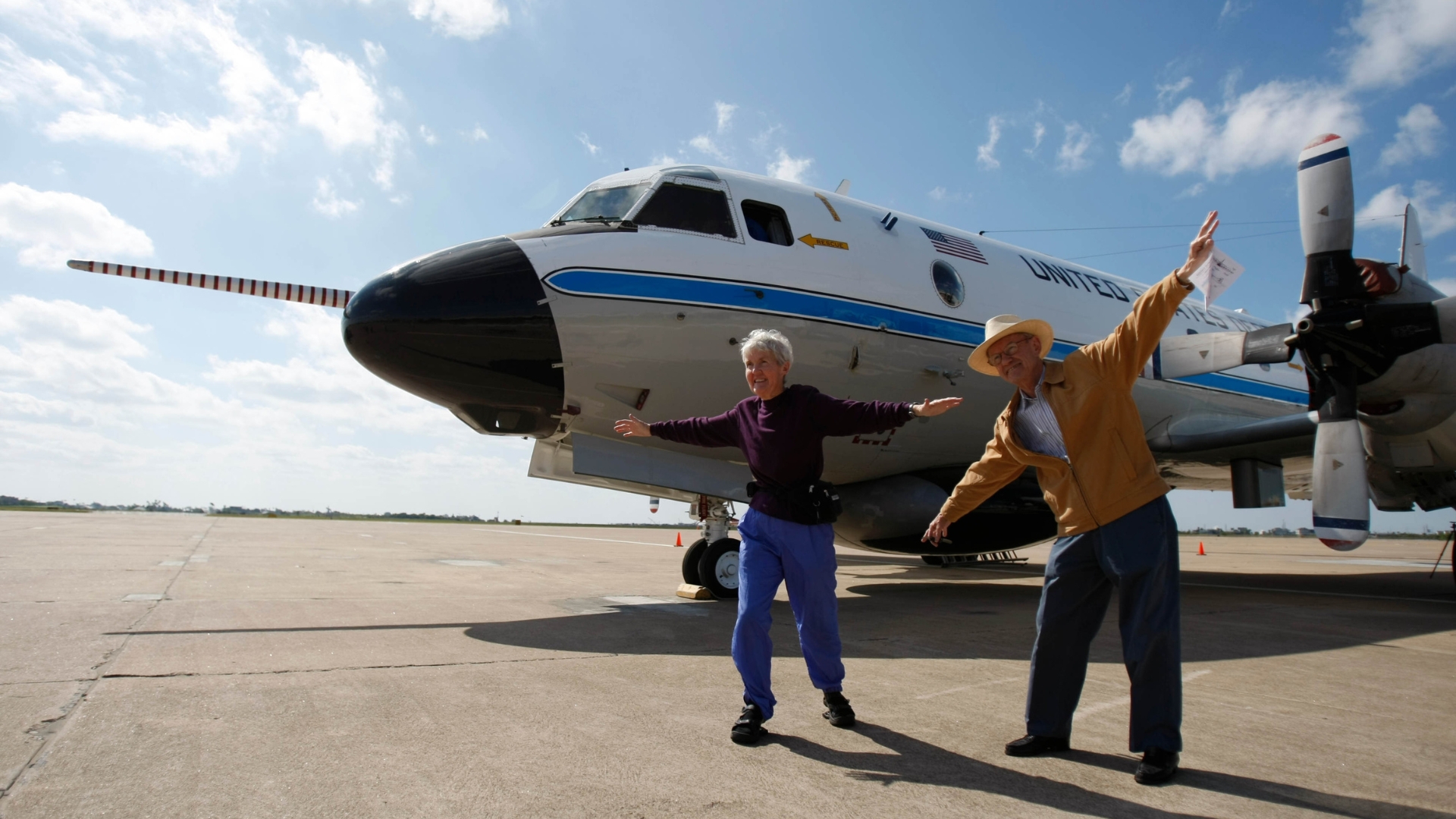


When a tropical storm or hurricane is headed for the US, the NOAA Hurricane Hunters play a critical role in gathering data that feeds the watches and warnings issued across the country. And the two planes central to that data collection are marking a big milestone this hurricane season — 50 years of flight.
Two Lockheed Martin WP-3D Orion aircraft, nicknamed Kermit and Miss Piggy, are responsible for carrying more than a dozen people into the eye of a storm, and it was in the summer of 1976 that “Kermit” took his first flight into a hurricane.
Fifty years later, the two planes is still flying. “Sometimes we like to joke about how we're flying museum pieces through hurricanes, but as far as planes go, in all the important areas, they're relatively new,” said Lt. Cmdr. Jacob Ellis, one of the current pilots.
FROM THE ARCHIVES | These Planes Fly Into Hurricanes To Study Them
The aircraft are designed to stand up to strong storm conditions, and they give meteorologists and scientists a chance to collect data that would be otherwise unavailable. Over the years, our hurricane forecasts have become more accurate thanks to data collected in the sky.
“Without those observations ... we're relying on instruments like satellite to try and derive the intensities of a storm, or the development of a storm. So, when we send the aircraft out there, we can actually get not only flight-level data of pressures, temperatures, wind speeds, but we're actually dropping several instruments within the storm as well,” explained flight director Kerri Englert
The data is transmitted to the ground within minutes, helping meteorologists update the forecasts Americans rely on.
So what is it like flying into a hurricane? Englert said the smaller storms that are still developing sometimes cause the most turbulence, but she said the most extreme turbulence happens when they fly through the eye wall of a major hurricane.
“Hurricane Polo recently, I had the opportunity on one of the passes to actually stop and look out the window and appreciate that big stadium effect. So it's pretty. It sounds cliche, but it's kind of magical to get to see that and experience it,” Englert said.
The aircraft have been meticulously cared for over the past five decades, including major renovations 10 years ago, various paint jobs and regular upgrades of the technology on board.
The crew recognizes they're stepping into a piece of history for every mission.
“It's pretty special to continue to get to fly this plane. It's like a real, like, generational plane. I know a lot of pilots and air crew members that their parents worked on this plane, and they're flying it now,” said Ellis.
There are only a few years of flight left for the two P-3's. NOAA’s Hurricane Hunters are scheduled to get two new C-130 planes in a couple of years, giving Kermit and Miss Piggy the chance to retire.
