



With Democrats poised to take control of both chambers of Congress, attention is quickly turning from the 2026 midterm elections to the leadership battles that will determine who guides the new House and Senate majorities.
Leadership elections are expected to begin next week, with Democrats facing some internal pressure over their current leaders and House Republicans preparing for a potentially tight contest of their own.
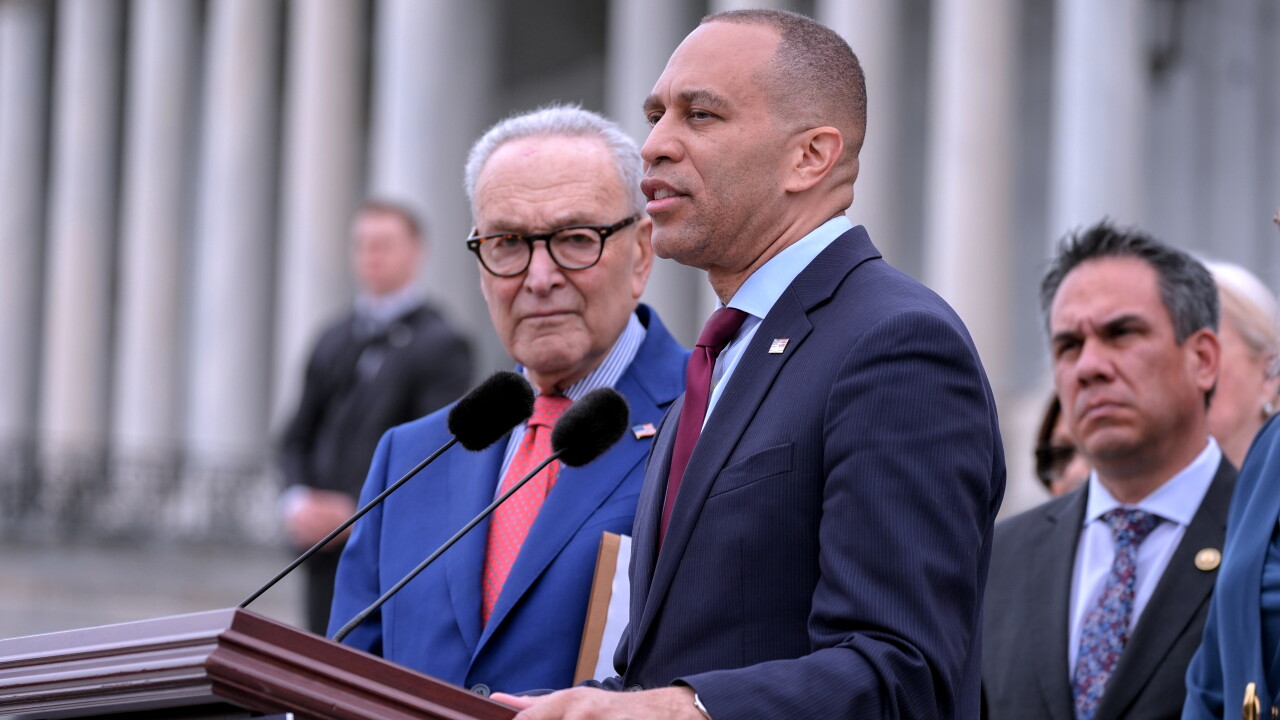
Senate Democratic leader Chuck Schumer and House Democratic leader Hakeem Jeffries are expected to remain at the top of their respective caucuses. Jeffries would be in position to become House speaker, while Schumer would become Senate majority leader.
Both, however, have faced calls from some progressive activists and incoming lawmakers for a change in leadership. Critics argue Democratic leaders did not push back aggressively enough against President Donald Trump while the party was in the minority.
RELATED STORY | Democratic leaders outline agenda after sweeping Congress in midterms
Among those calling for change is Maine Sen.-elect Troy Jackson, who said before Election Day that he would not support Schumer for majority leader.
"I've already said that I told Senator Schumer that I'm going to support somebody else, so it's no different now," Jackson said.
Jackson said he plans to push Democratic leaders on priorities including Medicare for All.
House Republicans, meanwhile, face their own leadership battle after Speaker Mike Johnson decided not to seek reelection. Rep. Jim Jordan of Ohio, chairman of the House Judiciary Committee and a prominent conservative, is competing against longtime Republican leader Rep. Steve Scalise of Louisiana.
The winner would become one of the highest-profile Republican voices on Capitol Hill as the party moves into the minority.
The leadership races come as vote counting continues in two unexpectedly competitive Senate contests in Mississippi and Alaska.
In Mississippi, Democrat Scott Colom holds a narrow lead over Republican Sen. Cindy Hyde-Smith, although neither candidate has reached 50% of the vote. Outstanding absentee, mail and provisional ballots could determine whether either candidate crosses that threshold.
In Alaska, Democrat Mary Peltola leads Republican Sen. Dan Sullivan by fewer than 1,000 votes as counting continues.
The outcomes will determine the size of Democrats' Senate majority, but not control of the chamber.
Democrats' victories will also create a divided government, with Trump remaining in the White House while Democrats control Congress. That dynamic could create significant hurdles for Democratic priorities.
RELATED STORY | Vance blames Iran war for sweeping Republican midterm losses
Trump has threatened to veto Democratic legislation, potentially setting up repeated clashes between the White House and Congress. Democrats have indicated they could use those disputes to build their case ahead of the 2028 elections.
Schumer argued this week that Democrats could pass legislation aimed at lowering costs and addressing corruption, forcing Trump to decide whether to sign or veto those measures.
"If Donald Trump does spend the next year vetoing common sense legislation to lower costs and end corruption, this election, this absolute Republican catastrophe on election night 2026, will look like a good day compared to what will come down on Republicans in the 2028 election," Schumer said.
With control of Congress settled but its leadership still taking shape, those internal elections will help determine how Democrats confront Trump and how Republicans position themselves for the next election.
